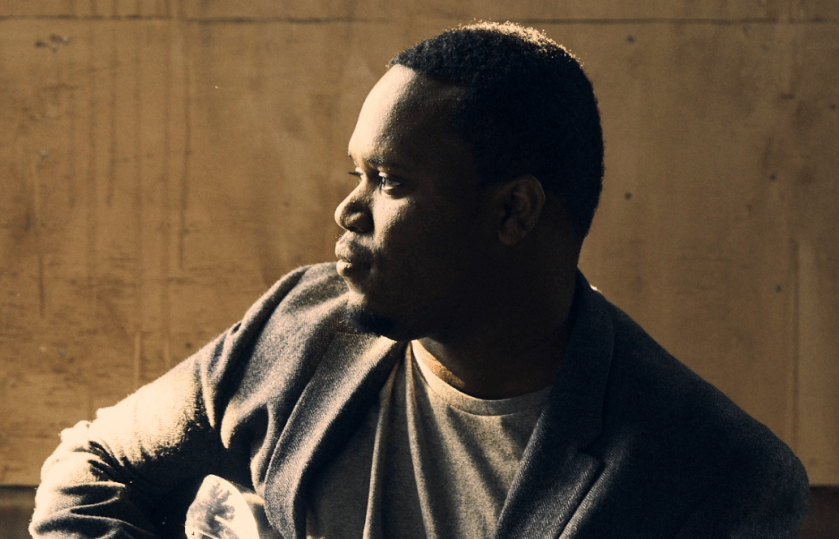
Jontavious Willis is a leading voice in acoustic blues who describes the format as “close to religion.” He’s also a self-described amateur music anthropologist who interviews older blues musicians in his spare time.
“I didn’t know it had a name, but I knew I liked it,” Willis said. “I knew I liked to hear where songs came from, how people pick up songs, how they relate to the folks around them, and how they put themselves in their music.”
I interviewed Willis with more or less those intentions. During our conversation, he came off as tremendously knowledgeable, almost like an encyclopedia, assuming an encyclopedia could display emotions like passion and humor. I had to bleep him more times for radio than any of my other 200 something guests by a factor of about three, yet he knew enough about the format to insert his own public service announcement for the suicide hotline into our discussion on “Ghost Woman.” In an understandable burst of emotion, he revealed that he would have killed if facing the conditions that Black Americans were subjected to before the end of slavery. In over a decade of doing these interviews I haven’t experienced many conversations this dynamic.
His new album, West Georgia Blues, is also the name of a style he’s developing. Jayy Hopp, who played second guitar on much of the album, is a fellow practitioner and Willis’ mentee. Willis performs as though the British Invasion never occurred, preferring to draw his modern influences from more local sources.
“You’re going to get hip-hop out of Georgia,” he said. “You’re going to get gospel out of West Georgia for sure. I don’t use pop music as a standard. I’m paying homage to the past, but also, I’m doing it now.”
A line from the title track sums it up nicely: “Some people sing the blues just ‘cause they know the song/But we singing these blues to carry tradition on.”
The album still presents diverse sounds within those parameters. “Ghost Woman,” a throwback to 1920s style laments and the longest track on the album, borrows lines from a number of songs from the era and repackages them into a coherent story. The warble in Willis’ voice came naturally at first, he said, but he exaggerated it to match the old recordings. The requests by the narrator for a ghost to stop haunting him and for a river to wash him away are desperate and powerful.
“Keep Your Worries On the Dance Floor” sounds like the sort of soul that would be at home in the 50s or 60s. It also spells out one of the things that makes blues so appealing by offering to help alleviate pain through good music with frank lyrics.
“I try to make it intimate, I try to make it personal, I try to talk to folks and not just shred and make the show all about me,” Willis said of his shows. “I want to get folks involved in my music, whether it’s listening or dancing. I want there to be a relationship for the time that we have.”
West Georgia Blues sounds almost experimental on “Time Brings About a Change” as Willis spits about a butterfly talking to a dying caterpillar about the future it might have with wings. The idea that those who embrace change can evolve while those who don’t are stuck in a more infantile state was striking.
I was curious how Willis, keenly aware of Black and American history through his musical knowledge and conversations with elders, would interpret the times we were living in. Like the butterfly he is, Willis said not everything needs to be perfect for him to appreciate the 160 years of change since the blues emerged from newly freed Black Americans.
“We’re living in a mighty fine time, and I’m glad to be alive right now,” Willis said. “Politics is always going to be politics, and we have further to go, but we’re always going to have further to go. Humans can’t live in harmony with themselves, so you know they ain’t gonna be able to live in harmony with people that don’t look like them or talk like them.”
Above is the full episode as aired on WUSB’s Country Pocket, including both my interview with Jontavious Willis and the songs we discussed, starting with “Keep Your Worries On the Dance Floor,” which illustrates the relationship Willis has with his audience. The interview begins with the second video in the playlist. You can hear the show live every Tuesday at 12pm on WUSB 90.1 FM or check the blog to watch it as a YouTube playlist. Visit http://www.WUSB.fm and http://jontaviouswillis.com for more.

 Country Pocket