Posted in Uncategorized

Jack Barksdale Forges A Fragile Peace With Humanity and Oblivion on Voices

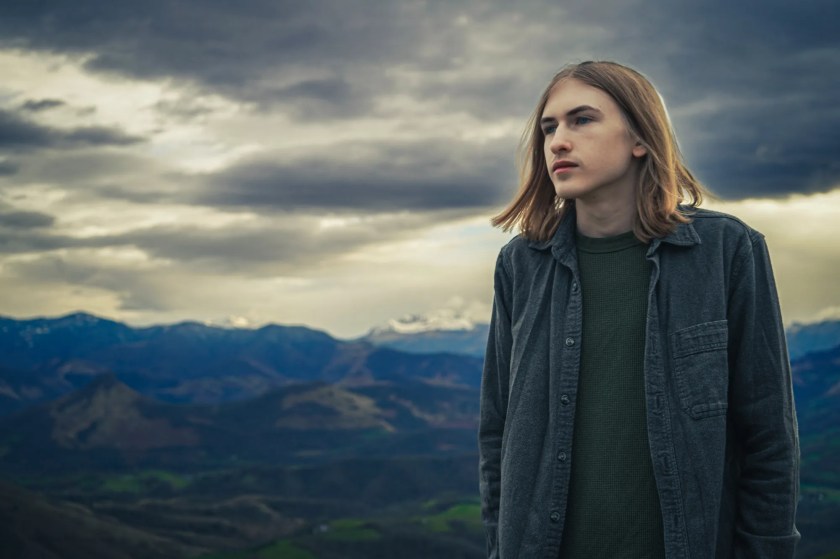
At only 17, Jack Barksdale is the youngest guest I’ve yet to have on my show. That does not seem to have stopped him from having an existential crisis.

“There’s a pie in the sky idea that someday we could advance enough to where we could move humans away from Earth. If we could actually move somewhere else, would it even be worth it?” said Barksdale when we spoke. 

After pressing him a bit, he relented that the concept of his song “The Cost” may be a bit harsh. 

“I’m using that as a way to point out that humanity is kind of messed up,” said Barksdale.

It’s concepts like this one that make Voices compelling and unique. Most professional teen musicians are either instrumental prodigies or singing about broken hearts. Barksdale is able to pinpoint the moment in the sun’s expansion that will render the Earth uninhabitable and use that knowledge as a springboard to ask a question as profound as whether humans as a species have earned the right to get a second chance on another world. He also has the wisdom and objectivity to know we probably wouldn’t do much better somewhere in space. Humans are “weaponized, glorified Homo Erectus” “just running from the grips of society and Father Time.” 

“Science is a lot more integral to philosophy than people think,” said Barksdale, noting that he’s constantly looking to learn from credible sources and differing views. His pandemic rabbit holes were healthier and more grounded than most, but no less life changing.

“Information is a powerful thing. It’s what the brain runs on,” said Barksdale.

“The End of Days,” which Barksdale described as being addressed to a more ‘common listener’ is blunt about things like the inevitability of death but much kinder about the situation. “We’ll have our fun/then we’ll make our day/to that sweet decay” he sings, softening the blow that not much matters.

There are truly different approaches to examining human existence. “A Funny Song” seems to take in the wonder of it all. On “Entropy,” Barksdale sings “we need to understand we’re not meant to be here and we’ll be leaving soon.” There is absolute despair in a song that ends in the words “I’m tired of rhyming.”

Another thread that runs through Voices is that of the oversized ego. “21st Century Savior” and “The Man, The Myth, The Legend,” both satirize those who see themselves as great. The latter takes aim at those who want to be great without deserving it. The former is absolutely sacrilegious in the most profound way: “Daddy put you here/and he can take you back,” Barksdale sings, seemingly as Jesus.

If there’s a song that gets at Barksdale’s personal emotions, it’s “A Song of the Artist.” The world is not ending in this one, but it shows the frustration with being a serious, passionate artist in this or any era.

“I think Van Gogh very well could go unrecognized today,” Barksdale said of an artist who also went unrecognized in his own time. “Especially with the serious songwriting, there’s not a ton of infrastructure for that to succeed. There’s never been a ton of infrastructure for it, but it has gone into the mainstream at times like in the 60s and 70s.”

He sees some hope in the internet reaching the right audience, but struggles with notions of what it takes to succeed even without industry middlemen. 

If you don’t fit what the algorithm wants, you’re going to have less opportunity and also there’s such volume of people that have the same platform, so it becomes saturated,” said Barksdale.

Still, the chants of “art defines me/art enshrines me” at the end of the song reveals a frustration with it all. Barksdale is right to suspect that algorithms won’t deliver his music on a large scale. Albums like Voices are for a very narrow audience, but the depth of thought and despair here along with some brilliant moments of provocation make it an extremely rewarding listen for those seeking a deeper cut.

At only 17, Jack Barksdale is the youngest guest I’ve yet to have on my show. That does not seem to have stopped him from having an existential crisis.

“There’s a pie in the sky idea that someday we could advance enough to where we could move humans away from Earth. If we could actually move somewhere else, would it even be worth it?” said Barksdale when we spoke. 

After pressing him a bit, he relented that the concept of his song “The Cost” may be a bit harsh. 

“I’m using that as a way to point out that humanity is kind of messed up,” said Barksdale.

It’s concepts like this one that make Voices compelling and unique. Most professional teen musicians are either instrumental prodigies or singing about broken hearts. Barksdale is able to pinpoint the moment in the sun’s expansion that will render the Earth uninhabitable and use that knowledge as a springboard to ask a question as profound as whether humans as a species have earned the right to get a second chance on another world. He also has the wisdom and objectivity to know we probably wouldn’t do much better somewhere in space. Humans are “weaponized, glorified Homo Erectus” “just running from the grips of society and Father Time.” 

“Science is a lot more integral to philosophy than people think,” said Barksdale, noting that he’s constantly looking to learn from credible sources and differing views. His pandemic rabbit holes were healthier and more grounded than most, but no less life changing.

“Information is a powerful thing. It’s what the brain runs on,” said Barksdale.

“The End of Days,” which Barksdale described as being addressed to a more ‘common listener’ is blunt about things like the inevitability of death but much kinder about the situation. “We’ll have our fun/then we’ll make our day/to that sweet decay” he sings, softening the blow that not much matters.

There are truly different approaches to examining human existence. “A Funny Song” seems to take in the wonder of it all. On “Entropy,” Barksdale sings “we need to understand we’re not meant to be here and we’ll be leaving soon.” There is absolute despair in a song that ends in the words “I’m tired of rhyming.”

Another thread that runs through Voices is that of the oversized ego. “21st Century Savior” and “The Man, The Myth, The Legend,” both satirize those who see themselves as great. The latter takes aim at those who want to be great without deserving it. The former is absolutely sacrilegious in the most profound way: “Daddy put you here/and he can take you back,” Barksdale sings, seemingly as Jesus.

If there’s a song that gets at Barksdale’s personal emotions, it’s “A Song of the Artist.” The world is not ending in this one, but it shows the frustration with being a serious, passionate artist in this or any era.

“I think Van Gogh very well could go unrecognized today,” Barksdale said of an artist who also went unrecognized in his own time. “Especially with the serious songwriting, there’s not a ton of infrastructure for that to succeed. There’s never been a ton of infrastructure for it, but it has gone into the mainstream at times like in the 60s and 70s.”

He sees some hope in the internet reaching the right audience, but struggles with notions of what it takes to succeed even without industry middlemen. 

If you don’t fit what the algorithm wants, you’re going to have less opportunity and also there’s such volume of people that have the same platform, so it becomes saturated,” said Barksdale.

Still, the chants of “art defines me/art enshrines me” at the end of the song reveals a frustration with it all. Barksdale is right to suspect that algorithms won’t deliver his music on a large scale. Albums like Voices are for a very narrow audience, but the depth of thought and despair here along with some brilliant moments of provocation make it an extremely rewarding listen for those seeking a deeper understanding.

Above is the full episode as aired on WUSB’s Country Pocket, including both my interview with Jack Barksdale and the songs we discussed, starting with The Cost, which puts on full display Barksdale’s connection between science and philosophy. The interview begins with the second video in the playlist. You can hear the show live every Tuesday at 12pm on WUSB 90.1 FM or check the blog to watch it as a YouTube playlist. Visit http://www.WUSB.fm and https://jackbarksdale.com for more.

Posted in Uncategorized

Old Friends Bring Up Complicated Feelings For Stephen Kellogg

Old friends are, for the most part, a bittersweet memory. We keep very few of them for our entire lives and the connections we share with them later on are insignificant compared to what once was. 

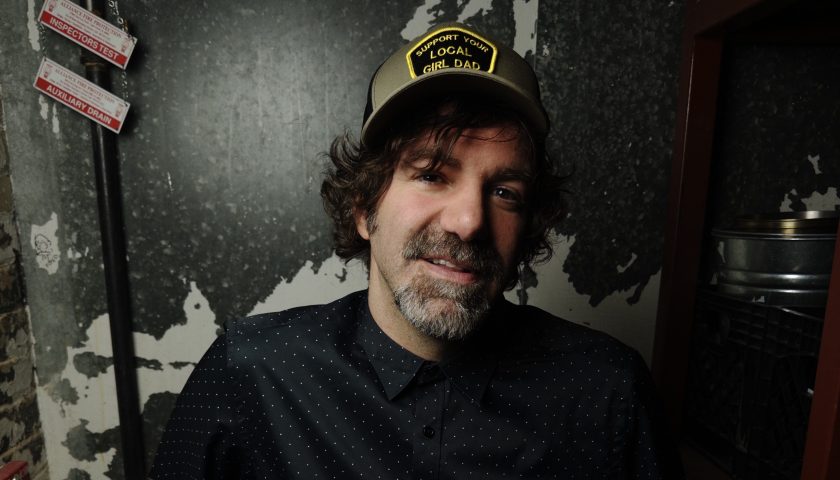
For Stephen Kellogg, that complex form of nostalgia makes for two of his best tracks to date. Deep friendships are hard to come by in the music business. 

“I know a lot of people a little bit and I wonder how many people I know on a deeper level,” said Kellogg. “I feel like the system is flooded. I thought you would just amass friends as you got older instead of accepting that some would come and some would go.”

His cowrite with Lori McKenna takes the form of a letter to someone who is not much more than a stranger these days. “Remind me what’s your daughter’s name,” he sings, hinting at just how far they’ve since drifted. The reasons for losing touch often have to do with much more than distance. People grow at different rates and in different directions. 

“Sometimes you run into people who it’s evident haven’t experienced as much of a shift,” said Kellogg, remarking that he’s changed a lot in certain respects. “It’s not really meant to be a judgment of one or the other. It’s meant to be the reality of it.”

Kellogg compared old friends to a childhood bed.

“This was a great place to be at that time, but maybe it’s not where you belong anymore,” said Kellogg. “Nothing’s wrong; the bed’s still a good bed. It’s not just where I belong anymore. I feel that way about some people and some people feel that way about me.”

“Waitress” also looks back at an old connection, though this time through the lens of discovering she’s passed away. The strength of the writing is in the matter-of-fact presentation. There clearly wasn’t a super deep connection between the two; he knows she lived a hard life, but the loss is still shocking. No line is quite as good as “I heard she lost the baby and I always meant to call.” It’s a thorough damnation of the narrator and, sadly, all too common. 

“The least busy people I know will talk to me about how busy they are,” said Kellogg. “We all know what it’s like to put off a call that you’re dreading. A lot of calls don’t get made in the name of not knowing what to say.”

Kellogg was luckier than his daughter or folks like me. When he first lost a peer, he was a bit further into life than his teenage years. Still, it’s a strange experience.

“It’s one thing when you lose a grandparent, of course I felt their absence and the sadness, but it’s also the natural order of things,” said Kellogg. “When someone is your own age, suddenly the universe felt like it had a hole in it. I feel like a little piece of me and my legacy and my understanding of the world chipped off. Every person you come across will in whatever increment impact who you become.”

The fact that it’s so easy to keep in touch is a double-edged sword. 

“In the old days you could call somebody and assume that maybe they didn’t get your message,” said Kellogg. “These days, you can get a message to anyone and they choose not to interact with you.”

To You Old Friend isn’t the sort of concept album this site generally reviews. “Harbor” is a gorgeous song, but it talks about childhood promises being forever. The songs discussed earlier would certainly disagree with that. Plenty of old friends show up as guest artists, but the first two tracks don’t lead to a lasting theme.

Still, the songs are worth discussing. “Harbor” is the standout, a promise of lifelong support that sounds like it was dreamed up on a porch and performed like it would be a singalong at a live show. It’s a rosy view of old friendship that feels warm and beautiful even if other songs make it seem unlike lived experience.

“Ghosted” and “Old Guitars” discuss relationships that fell apart in ways that left Kellogg with questions and pain. “Buckets of Rain” is an uncomplicated love song; a promise of fidelity during dark times. “Kiss the Ring” is a highly specific tell off that somehow enough detail to determine exactly who is the target. It’s the one real misfire on the album.

“Almost Woke You Up” is a live version of a prior highlight from Kellogg’s songbook brought to amazing heights by the supporting cast. This was done on a Counting Crows tour and Adam Duritz and the band all play on it. Kellogg’s daughters also make an appearance as backup singers. Performed in front of a much larger crowd than Kellogg is used to, the track has incredible energy. It was Duritz who picked out the song and had the idea to bring Kellogg out during his set. 

“A lot of times big professional moments don’t live up to the hype because often it can feel too intense and you can’t take it in,” said Kellogg. “It’s one of my all time favorite bands, two of my all time favorite people, and I definitely wasn’t lost in this.”

Kellogg has a lot of respect for Counting Crows for staying true to their style even after achieving commercial success. He admitted that he’s modified his style to chase a hit before and lost out in two ways: it made him feel inauthentic and the hit never materialized. 

“A hit is a miracle, but when that happens and you’re not being an authentic version of yourself, you’re saddled with pretending to be something that you’re not,” Kellogg said, somewhat glad he didn’t score a hit by altering his style. 

Aside from commercial gains, Kellogg sees a hit as a “mandate” to keep playing with a band. In other words, a perfect excuse for old friends to stick around a while longer.

Above is the full episode as aired on WUSB’s Country Pocket, including both my interview with Stephen Kellogg and the songs we discussed, starting with “Old Friend,” which features cowriter Lori McKenna on guest vocals. It’s exactly the sort of song you’d expect from these two. The interview begins with the second video in the playlist. You can hear the show live every Tuesday at 12pm on WUSB 90.1 FM or check the blog to watch it as a YouTube playlist. Visit http://www.WUSB.fm and https://www.stephenkellogg.com for more.

Posted in Uncategorized

On “Love Addict,” Caitlin Cannon Can’t Get High On Her Drug of Choice

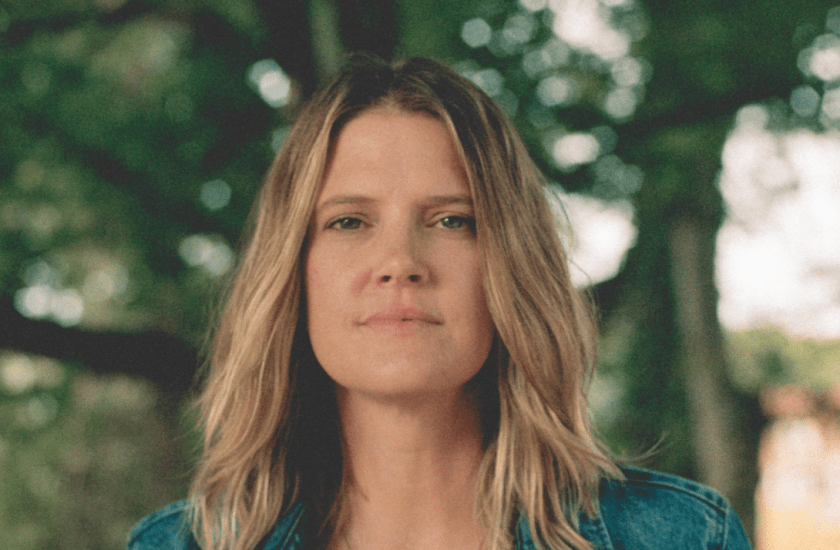
Addicts often have an unhealthy relationship with a particular substance and can’t quite get the high they need. “Love Addict,” therefore, is the perfect title for a Caitlin Cannon album that contains few happy endings and many a struggle. It’s sometimes provocative, sometimes classy and classic, and the song with the happiest ending might have the trickiest story behind it. 

The title track is one of the more explicit country songs that isn’t a novelty, but that’s okay. Listening to it feels like listening to a frustrated forty-something woman finally comfortable to go off on a delicate subject. “Why can’t a woman just get to fuck?/ One night together and I fall in love,” Cannon sings, frustrated with her biology and psychology.

“I just don’t want women to give in to this messaging that when you’re 40 you’re finished and no longer desirable,” said Cannon. “I did want the record to be sexy but I don’t want it to negate the depth.” 

The depth is there. Of the two studies mentioned earlier, the psychology dominates most of the album.

“Once the word is said/it’s the beginning of the end,” Cannon sings on “I Wouldn’t Say I Love You.” 

“And if you never gave a damn/help me let go of what I never had,” she adds of “Let it Hurt Some.” “Gravity promises pain,” she sings on “Impact.” When it comes to true love, Cannon does an incredible job talking herself out of it.

“I think it is harder for me to access a positive emotion and trust it,” said Cannon. “I want to keep it real so I don’t become made a fool of my own trust in a feeling in love that might be fleeting. I think that’s a defense mechanism that hasn’t really served me well.”

Her definition of real love, the kind that survives infatuation, is devastating.

“How long are you willing to do the dance of projecting your childhood trauma onto each other and healing each other,” she asked. “And how long are you willing to stay in that? That’s essentially real love. I don’t know if I have that to give.”

Real love does feature on the album twice, once in a complicated fantasy and once as a tragic almost-true story. 

“Waiting,” based on Cannon’s brother who is serving life without parole, shows up at the end of the album as a demo. It’s a particularly sad and well-written entry into the country prison song genre that imagines a high school sweetheart keeping in touch with her man on the inside. The song’s tragic ending is imagined, but that much is true. The reality may be even more tragic: despite being a juvenile, Cannon’s brother is never getting out.

“I told that story basically to express his love for her. They’re very much a part of each other’s lives,” said Cannon. “It’s devestating when your best friend and brother is in prison with life without parole and doesn’t have the opportunity to have a real relationship. It doesn’t make sense that someone who is going to spend the rest of their life in prison but becoming someone so worthy of that love. So I tried to create an afterlife scenario.”

She describes “Waiting,” of which a studio version was released on an EP last year, as the only true love song on the album. 

Of the new tracks, “Room 309” comes the closest to sounding like a true love song. After a one night stand with a star, a musician writes a song about it and gets big. Love blossoms from there. The true story is more complicated.

Cannon cowrote the song with Shawn Camp, but she also wrote the song about Camp. The couple in the song are performing duets and tucking their kids in at night. Camp declined to play on the track. Cannon hoped it could lead to a bigger role in the music industry for her, but so far, it’s only led to one song. 

“My message to every single girl chasing a carrot dangling in front of them: ‘Bless that carrot for getting you there but you’re going to have to work three times as hard as everyone else just like Reba did,” said Cannon. “None of those guys are coming to save you. You will never truly be able to barter in that currency in this business. You have to put everything into your art and at least you have that.” 

Not all feelings about the experience are bitter, however.

“I happen to love the verse we wrote,” Cannon added. “I think it’s better than I would’ve done on my own. Ironically, I think I needed him for that happy ending.”

“My Own Company” is the best new song on the album because it focuses on the relationship Cannon, someone who attends 12 step programs and is working on doing more good, is clearly focused on most. 

“I started writing that when Naomi Judd left us,” said Cannon. “It reminded me of the 2008 housing crisis when I was working in New York. People were jumping out of windows to their death because they were waking up to my net worth. You really have to have something you can cling to in yourself.”

Cannon added that she appreciated that the Judd family was so open with mental health. With “Love Addict” and this interview, Cannon adds to that legacy. Few albums have ever laid so bare a self-inflicted loneliness and tragic but realistic assessment of what “real love” is. It’s hard to listen to. And yet for me, it’s relatable in ways few other albums are. I, too, have some childhood trauma to project and a tendency to keep to myself. Yes, sometimes even harder days. Works like this are meant for those days. Art that meets you on those days is something to cling to.

Above is the full episode as aired on WUSB’s Country Pocket, including both my interview with Caitlin Cannon and the songs we discussed, starting with “I Wouldn’t Say I Love You,” which tries hard to avoid ending the beginning of a relationship. The interview begins with the second video in the playlist. You can hear the show live every Tuesday at 12pm on WUSB 90.1 FM or check the blog to watch it as a YouTube playlist. Visit http://www.WUSB.fm and https://www.caitlincannonmusic.com for more.

Posted in Uncategorized

Leslie Jordan Grants Her Grandfather Grace On The Agonist

Leslie Jordan never knew her grandfather. Her mother barely knew her father, for that matter. He left her and his wife and wandered the West, fancying himself as a beatnik writer. When he died, Leslie’s mother was given a chance to claim some of his possessions. She chose his writings.

“The Agonist” is inspired by those writings. Jordan was allowed to read them about a decade ago and saw some of herself in the fellow artist from whom she descended. 

“I never knew him. I didn’t even know much about him when I was a kid,” said Jordan. “We got to know this man through his writing.”

In one of those writings, Robert S. Gott calls himself “The Agonist,” which is the term for a chemical agent that initiates a reaction in other substances. The album begins with an introduction of Gott and his lonely ways.

“There’s this person who on his own was a bit ineffective,” Jordan said. “But I’m hoping this album maybe brings some effectiveness to the story of his life.”

Gott had an extraordinary life. He was a sentry in the Texas desert, a poet roaming the West coast, and a lover to his brother’s wife. Gott was a man who struggled in interpersonal relationships and Jordan suspects it has to do with the one topic absent from his writings.

“I think there’s a lot to his story that was kept private and there was trauma from being a young boy drafted into the military,” said Jordan. “He went to Japan during World War II. He doesn’t write about his experience there, but I would assume that marks a man.”

Jordan has both an incredible voice and does an incredible job capturing Gott’s voice. She thoroughly transforms some of his writings into more complete stories without losing elements of the original. Gott once wrote from the perspective of a mother who was struck by her teen son and then struck him back. The specificity of the account leads Jordan to believe it was an event in Gott’s life, but she has no confirmation. Still, she tells the story well in a tense song, repeating that in every sort of relationship, people must “find the limit.” 

“I’m not saying we’ve all had these moments with our kids, but I do think there are moments when feelings and emotions are heightened and we react in ways we don’t anticipate,” Jordan said of the characters. 

Gott was often vilified by her mother’s family. They kept in touch through occasional phone calls, but things were always quite strained. Jordan is more forgiving of the solitary man after understanding a bit of what he went through.  

“He was an addict. Even when he was married to my grandmother, he spent a lot of time in jail,” said Jordan. “Back in those days, I don’t know if rehab was a thing. He just needed more help than what he was given.”

“What I choose doesn’t always make sense,” Jordan sings at one point, describing Gott as a man repeatedly drawn back to a job in the remote Texas desert.

“He did a lot of it alone because I think he saw how much he hurt the people he loved in some of the darker moments of his life,” Jordan explained.

“Sometimes, Sylvia” is certainly evidence of that. Gott’s writings revealed he had an affair with his brother’s wife but eventually cut it off after reflecting on what they were doing. The song displays those complex feelings well.

Perhaps the most beautiful lines by Gott comes from “Requiem for Bobby.” 

“Oh, all things, all things, you’ve finally learned to love,” Gott wrote in what was effectively a eulogy for him self. Jordan made the line the center of her closing track and teamed with the Milk Carton Kids for the sorts of harmonies she purposely resisted including on songs about more lonesome eras of Gott’s life.

Jordan suspects Gott knew his life hadn’t amounted to much and asked, “what if acceptance is the one thing I can show for myself?”  

“He was always trying to make right,” she added. “I hope that toward the end of my life, I can come to terms with the messy parts of my story.”

All may not be healed between Gott and his estranged family, but there’s now connection and understanding on a scale unimaginable without that box of writings. 

“Whether he did it intentionally or not, it really has become one of the greatest gifts for our family,” Jordan said. “I do know one of his deepest longings was to be a published writer, and he is now. I think and I hope that he would feel honored by that.”

Above is the full episode as aired on WUSB’s Country Pocket, including both my interview with Leslie Jordan and the songs we discussed, starting with The Fight, which you can compare to Gott’s original writing when Jordan shares it in the interview. The interview begins with the second video in the playlist. You can hear the show live every Tuesday at 12pm on WUSB 90.1 FM or check the blog to watch it as a YouTube playlist. Visit http://www.WUSB.fm and https://www.lesliejordanmusic.com/ for more.

Posted in Uncategorized

Sean McConnell Delves Underneath on Career Highlight “Skin”

Sean McConnell is deconstructing and rebuilding on “Skin,” his latest thoughtful, spiritually influenced work. He is unlearning to learn, maturing by finding a child within, and becoming a better man by being better to himself. He explained that in addition to some habit changes like no longer drinking, the largest changes he’s made involve self talk. “The greatest lie the devil tells/is that he is someone else/and we die swinging at a ghost/instead of looking in ourselves,” McConnell sings on perhaps his best lines on the album.

“I had to look inside of myself,” said McConnell.  “I’m the narrator of a lot of these paradigms I need to break. The whole game, whatever this is, is about darkness and light and balance. I’m just trying to figure that out for myself. The more you go inward, the more it speaks to everything else as well.”

Heaven is covered in skin, McConnell theorizes. Much like the devil, peace and love can be found within. It’s that beautiful idea that forms the basis of the rest of an album of searching and reconstruction. 

The journey begins on “Demolition Day.” It’s a song about exorcizing demons and rising from the grave and breaking curses. Despite those phrases, the song is uplifting and a celebration of newfound freedom. 

“The West Is Never Won” starts to explain what exactly comes after. “Make God a good and a bad guy/just so they always wonder,” he sings, rebuking the way certain strains of religion asks you to fear the embodiment of love itself. Classical education corrupts natural instincts, McConnell feels, urging the listener to keep their heart wild.

“I started writing that song to my daughter, and I think of her every time I sing it, but almost equally I came to find out I was singing to my inner child,” said McConnell. “Our naked soul born into this world is the untamed west and people and systems and ideas and self talk will try to tame you and suppress you. But we can tap into that. Your soul tells you right and wrong. It’s beautiful and untarnished.”

Not all souls tend toward the good, but the best word of McConnell’s idea is conscience. When kids are young enough, they’re unbothered by such things as peer pressure. As adults grow up, they may be able to follow their moral compass a bit more. The in between, the time when we’re both being molded to and trying to fit into some role in society, that can be a bit more murky.

“Southside of Forever” and “Older Now” are the most interesting mid-album songs. The former addresses a “contradiction” in McConnells material: many people living miserable and self-destructive lives will never change. That even McConnell can’t imagine a happy ending for these people — if not in this life but the next — speaks to a groundedness that many spiritual thinkers and bleeding hearts lack. The latter track is a pleasure because it sees McConnell imagining a full life of maturing and improving. It’s an understanding that love in your 20s is both more intense and less profound than anything you’ll feel in your 40s. 

The album ends on a delirious high note. “New Sons And Daughters” imagines a world without something similar to the concept of original sin. When McConnell sings the word “free,” he’s putting tremendous emotion behind it. There’s a sense of peace and yearning that’s hard to come by in almost any kind of media. McConnell described the recording session as being magical for him. He knew he nailed it. 

“There’s so much energy behind that word that has a lot to do with wanting it so badly and sometimes experiencing it but not enough,” said McConnell. It’s really hoping that’s true or trusting that’s true with the flickers of what you get to experience. [The] That song is sifting through this haze of all of the baggage — religion, things people said, ways I was raised — and asks at the bottom of that, is it love and benevolence and freedom? And I think it is.”

Modern society conditions us to be self-interested and overprotective. Generations before us have passed on some beautiful spiritual traditions, but they’ve also left us with cycles of war, deep inequalities, and 

McConnell describes himself as a spiritual dabbler, always looking for answers. 

“For better or for worse, it’s been an obsession of mine since I was a kid,” said McConnell. “It’s always in my music and it’s normally what I’m reading. It’s part of who I am. That search is insatiable and constant.” 

His explanation for what’s out there is unique and gorgeous. It’s a theme shared by many religions, one that perhaps touches on afterlife. A place we come from and a place we will one day find peace in again.

“When I go inward, I have some sort of trust or hope that as bad as the wave can be, we all return to the ocean,” said McConnell. “It doesn’t make the wave any less scary and fucked up and weird and unknowable, I just have faith that whatever that ocean is, that we get back there.”

For those who think intensely about the world, the notion that humanity could break its destructive patterns and live peacefully is just about the best dream we could ever live. For five minutes and 24 seconds, McConnell allows us to bask in the beauty of that notion with him. I’ve never been so glad a songwriter has freed a few tears from my eyes.

Above is the full episode as aired on WUSB’s Country Pocket, including both my interview with Sean McConnell and the songs we discussed, starting with Skin, which serves as a title track and thesis statement for the album. The interview begins with the second video in the playlist. You can hear the show live every Tuesday at 12pm on WUSB 90.1 FM or check the blog to watch it as a YouTube playlist. Visit http://www.WUSB.fm and https://www.seanmcconnell.com for more.

Posted in Uncategorized

Jett Holden Draws Beauty From The Darkest Places On “The Phoenix”

Few songwriters are truly at expressing strong emotions with powerful and specific words. Few singers in roots music can sell those lines with the flare of a rockstar and the sincerity of an actor. Jett Holden seems born to do both.

The fact that we even have The Phoenix is a bit of a miracle. Holden had stepped away from music before deciding to give it one last serious try.

“I didn’t want to, but at the same time I knew I wouldn’t forgive myself if I didn’t take the chance at least,” said Holden. “I’m grateful. I’ve gained a lot of community over the last four years since Black Opry was incepted.”

Holden’s debut album is a display of powerful, emotional songwriting on both the political and the personal. It features the unapologetic perspective of a queer Black man from the American South. It deals with both trauma and inspiration. He rhymes corpses and forceps. It even has lines like “if you think karma is a bitch then the truth is you may be a bitch yourself.”

When we spoke, Holden was pleased that I zeroed in on so many of his lyrics, describing them as his favorite part of the songwriting experience. He spoke as though sharing intense feelings and trauma was an easy thing for him.

“Writing’s the way I got through so much of my life,” said Holden. “Sharing it helps me feel like I’m helping someone else.”

The album can be divided between the fun and the intensely personal. “Karma,” featuring one of Nashville’s most visible allies in Cassadee Pope, is catty pop perfection. “Necromancer” and “Scarecrow,” which has fun with Wizard of Oz characters at an opportune time, get a serious point across but are more clever than impactful.

Then there are the tracks that hit like a truck.

Holden chooses to lead the album with “Taxidermy,” one of the most defiant political anthems in recent history. He calls out racism, police brutality, homophobia, and the empty posts of so-called allies before a pivoting to a third act sung directly to the sorts of people who are impacted by the hurricane that is American culture in the Trump era. 

“There was a lot of talk,” Holden said of our social media feeds in 2020. “There were a lot of faces on Facebook walls, but there wasn’t a lot of action behind those words.” 

He went on to explain that many people who posted a black square for a profile picture went on to vote for someone determined to stamp out Black history. 

“It felt like it could’ve been me at any moment,” Holden said of “Taxidermy.” “I was living in Northeast Tennessee at the time, which isn’t always the best to queer people or people of color. There was like one gay bar I could go to and I would hear the n-word out the window just trying to walk to the grocery store.”

The words of inspiration at the end of the song and the verse about a queer teen committing suicide are painful reminders that it’s not only the bigots who need to be convinced that other groups deserve to exist. 

“It’s kind of heavy handed, but it felt appropriate,” said Holden. “It felt like a cool opportunity to say something, but also leave people with a hopeful message at the end.”                                                                        

There are songs that go to even darker places. And yet, they’re all strangely hopeful.

“Perfect Storm” is Holden’s description of being in an abusive relationship and needing to get out before it ended in violence. He describes being struck with fists and discovering a gun. Incredibly, he admits contemplating an act of violence himself. “I am not a lamb to the slaughter/I have heard the banshees cry his name,” he sings.

“I had been in a controlling relationship and I feared for myself a lot,” Holden said. “It was the first time I saw what it was that kept people in abusive relationships and I was the person who couldn’t escape it. That song was me trying to pull myself out of that mindset.”  

As painful as the experiences in “Perfect Storm” are, it could be vital for someone else in the situation to hear how Holden managed to escape.

The song became a rock-laced piano ballad that saw Holden’s most powerful vocal performance. When it comes to emotional performances, Holden is as sincere as they come. 

“A lot of these songs are lived experiences,” said Holden. “It’s not difficult to pull from that in that sense. It’s more so about getting comfortable on stage. That was the difficult part.”

“When I’m Gone,” featuring Emily Scott Robinson in another stellar backing vocal performance, also came into existence for a tragic reason: Holden lost a friend to suicide and decided to write the note that she hadn’t. Holden experienced depression himself, so this had to be a difficult song to write. The result is almost unimaginably comforting for the reader of the note. “I know you believe in Heaven/but I believe in souls/they all have to go somewhere/and mine’s tethered to yours,” wrote Holden. Graces like a happy hereafter and a continuing love story are extended to the dead and their partner. It’s no happy ending, but anything that can dull the pain at that point is welcome.

The last truly spectacular song on the album is the title track of sorts. “West Virginia Sky” literally tells the story of the sun and a dying phoenix, but it’s truly about a husband losing his wife. The natural imagery is stunning and Holden’s soaring vocals match the moment. My only criticism is that it’s almost too gorgeous to register as the only truly bleak song on the record.

“I used to help my mom take care of my grandma,” said Holden. “She has Alzheimer’s and I watched that process. People deal with that all the time being caregivers for their family.”

It’s the perspective of the husband that makes the song so difficult to stomach. He’s watching his wife fade. He’s watching his relationships with his children fade.

“Soon he’ll reach supernova and his time will come, but what will be left of everything after he’s gone,” Holden asked. “A lot of times people say life is short, but life feels so long sometimes. Especially when they’re dealing with trauma or loss.” 

If one phoenix is the dying wife, and another is the title of the album, Holden admits to feeling like a third. His return to music was more than a career choice. 

“It was not just about giving up on dreams,” said Holden. “It was about not giving up on yourself. Your life is precious. The best thing you could do is fight for yourself and fight for other people following in your shoes.”

Above is the full episode as aired on WUSB’s Country Pocket, including both my interview with Jett Holden and the songs we discussed, starting with “Taxidermy,” which is both a scathing protest song and a love letter to the marginalized. The interview begins with the second video in the playlist. You can hear the show live every Tuesday at 12pm on WUSB 90.1 FM or check the blog to watch it as a YouTube playlist. Visit http://www.WUSB.fm and https://www.missingpiecegroup.com/jett-holden for more.

Photo credit Kai Lendzion.

Posted in Uncategorized

John Depew Asks The Biggest Questions And Finds Simple Answers On The Near Perfect “Bell of Hope”

Progressive bluegrass is a genre all its own. The arrangements and movements are dazzling, complex, and imaginative. The lyrics, on many songs, feel like an afterthought. 

John Depew has the movements and the picking talent required to swim in the deep waters of the genre. He also has existential questions and hard won convictions about a few simple things that are important in life. His racing mind and the busy instrumentation swirl together on Bell of Hope. The result is strange and beautiful. It’s an album that features dozens on questions and maybe a handful of answers that somehow manages to satisfy. Phones ring. Eons pass. The natural world reveals its secrets. 

Put simply, Depew’s first full album is a magnificent high point in a genre that’s been too long stagnant and in awe of Chris Thile and jam bands. Depew’s voice sounds a lot like Thile’s, and the mandolin work isn’t quite at that level, but he thinks so much more deeply. 

“I’m maybe pathologically philosophical,” Depew explained when we spoke.

His first track, “Whale,” is about diving deep into his art as a way of life and a means of him supporting himself. He described the biblical imagery as familiar in his midwestern surroundings and said that while he tried to get on the phone with God in the song, his spiritual beliefs are more complex than the lyrics would suggest.

“When I use the word God, I’m talking about something quite a bit vaguer. I’m talking about whatever the creative force in the universe that makes everything happen,” said Depew. “There’s a certain idea in Christianity of God being this bearded dude. This person in the sky looking down on us with human-like thoughts going through his head. That’s not really what I mean, but I don’t really know what I mean.”

Regardless of who answered, Depew decided to climb inside the metaphorical whale. 

“It’s kinda freaking terrifying to leave a stable life and try to be a musician instead,” said Depew. “It’s a stupid thing to do. There’s a huge unknown, but I feel like I have to do this thing. There’s a place for me in this world, but I’m going to have to throw myself into it.”

Depew’s theory of life slowly becomes more apparent throughout the album. Nature is a source of inspiration and grounding, while natural history is proof of a greater plan.

“Anywhere you are in nature you can have a spiritual experience just by looking around,” said Depew. “I think it’s really important to recognize that although in a lot of cases it doesn’t always feel like it, humans 1000% are part of nature.” 

Birds in particular symbolize something important. He borrowed a concept from a Mary Oliver poem when he sang “They claim ownership of nothing/that’s the reason they can fly” on “Lesson.” 

“It’s very difficult for me to relinquish the concept of ownership as a white midwestern man from an agricultural society,” said Depew. “I really liked that idea when I read that in her poetry. The idea that freedom comes from letting go of the baggage that is our dominion over the world and letting ourselves exist.”

The swarming questions fade in the title track as some kind of answer emerges. Over the course of 12 minutes, Depew takes us through the history of the universe from the Big Bang to the emergence of human life. In the face of such a massive backstory, Depew feels as though ringing the “Bell of Hope” is all humankind can do. That can take several forms.

“The only thing I think I can really do is treat my wife and my kids with reverence and make meaningful connections with other people,” Depew said. “I think sitting in my bedroom thinking on these questions isn’t really going to do anything.” 

And yet in my case, it was all that questioning that sparked the connection. Depew saw our 40 minute conversation on topics ranging from the fabric of the universe to the strange rationals for genocide as another ring of that bell. 

“I could’ve written a 12 minute song about chasing tail in the bar and we wouldn’t have had this conversation,” said Depew. “In some ways ringing the bell of hope is just getting up every morning and trying to be a nice person.”

The last track, a celebration of good roots music, is a fitting way to close an album like this. “Joyful Sound” remarks on the way music can help us through hard times. Times are hard, but art like this is a powerful medicine. And the way Depew arrives at fairly traditional values through complex questioning of the world around him is decidedly refreshing. Even for radically different minds, time with loved ones is a common salve.

Above is the full episode as aired on WUSB’s Country Pocket, including both my interview with John Depew and the songs we discussed, starting with Whale, which is one of many songs on which John respectfully uses Christian imagery despite having more complicated beliefs. The interview begins with the second video in the playlist. You can hear the show live every Tuesday at 12pm on WUSB 90.1 FM or check the blog to watch it as a YouTube playlist. Visit http://www.WUSB.fm and https://johndepewmusic.wordpress.com for more.

Posted in Uncategorized

Bryant Roses Is Grateful For His Domestic Life, However Fleeting The Moments May Be

Most of the musicians I’ve interviewed on this show spend significant portions of the year on the road. A recent guest noted she played 160 shows in 2024 and immediately acknowledged it was a bit much. Bryant Roses is not one of those musicians. He works a day job and wouldn’t trade the road for the time he gets to spend with his three kids. 

The result is the type of album few touring musicians could produce. He dives fully into the small world of his home. Gardening takes center stage on a few songs. He documents the internal struggles and joys associated with raising kids like only someone fully involved in doing so can. 

“I like my domestic life and if that means sacrificing some of the potential success I’d have, I think that’s fine,” he said. 

He’s always enjoyed writing music and has used social media promotion as a way of sidestepping the touring. On his song “Small Star,” he celebrates the time he gets to spend with his wife as a result of his choice. He acknowledges that few will hear his music, but prefers that to being a bright shooting star. “We won’t burn out that easily,” he says.

“There’s a whole sea of small stars thanks to social media,” Roses said. “Anyone can make a song and have a million people listen to it and that’s more accessible to more people. Aside from all the pitfalls of social media, I do think there’s something beautiful about being able to make more artists.”

Artistry is something important to Roses, who has always been something of a songwriter. He started posting covers on social media and releasing new music in part to promote the idea that anyone can participate in something beautiful. 

“One of the reasons I started to pursue it again is for my kids,” Roses said. “It’s something that’s always been a big part of my life and it had taken a little bit of a back seat. But I really wanted to show my kids that you can pursue a creative life if you have a day job or aren’t living the life of a touring musician.”

The day job doesn’t get much mention, but the time with his kids certainly does. They’re the center of his world and he’s looking to make the most of his time with them. 

“Being a parent, you’re confronted with these moments of meaning that are so deep and so profound, but at the same time so fleeting,” Roses said. “The day to day life that may seem mundane are actually the kind of moments I want to stand in front of more fully and not just let them slip by.” 

“Hallelujah” is the closest he comes to complaining. There’s still plenty of appreciation, but the little difficulties get mentioning here. The title praise comes at the notion that eventually, he’ll get some sleep. This album is so noble and pure when it comes to parenting and love, so a little humor and realism goes a long way in making it relatable.

Gardening is a major part of the album, though the songs aren’t quite about maintaining a garden. In “Baby Redbud,” Roses is marveling at the experience of watching something under his care grow. It’s gorgeous to hear him sing about helping the tree through the winter and heartbreaking when he arrives at the eventuality that comes with being a parent: “I don’t want to leave but I got to.” In his telling, nurture is like watering a plant and pruning is a bit like stepping in when the kids are acting up.

“Exactly when it crosses the line gets pretty blurry when you have a bunch of boys laughing, and then wrestling, and then it gets a little too much,” Roses said. 

Echoing his father’s words, he noted that his role was changing as his kids got older: “As your kids age, the problems require a little bit less immediate attention but they get more complicated.”

The gardening metaphor extends to the internal struggles. Roses compares the early childhood years to a winter inside. 

“You’re focusing on keeping this small baby safe and fed and you just turn inwardly for an amount of time, Roses said. “When they grow up you slowly start to emerge into the world.” 

It’s not a coincidence then that he ends the album on a song called “In The Weeds” that marks going back into the world and the need to work on himself again. But that neat ending comes with a bit of a catch. At the time of our interview, the Roses had just brought their newborn third child home.

Above is the full episode as aired on WUSB’s Country Pocket, including both my interview with Bryant Roses and the songs we discussed, starting with Baby Redbud, which turns gardening into a bittersweet reflection on parenting. The interview begins with the second video in the playlist. You can hear the show live every Tuesday at 12pm on WUSB 90.1 FM or check the blog to watch it as a YouTube playlist. Visit http://www.WUSB.fm and https://bryantroses.comfor more.

Posted in Uncategorized

Protest Songwriter Lou Dominguez Expands To Cover Love and Faith on Hanging At The Luna Star

Lou Dominguez is a folk musician who hungers for the type of folk musician he grew up listening to. 

“Let’s go back to the 60s/the village beatnik scene/when heroic writers still mixed politics with song,” he sings in “For Steve Earle.”

Lou Dominguez also happens to be that kind of folk musician. He didn’t expect to be writing for such dark times, but he seems more than up to the challenge.

“Barack Obama became the president of the United States and I thought maybe, maybe we were done with this,” Dominguez said. “Clearly we’re not.”

While he praises Steve Earle, Ani DiFranco, and Tracy Chapman in his music, he’s struggling to find a prominent folk artist who is at their most relevant today for writing protest songs. 

The key word here is relevant. Folk as a genre has faded in popularity and while some Americana stars have found mainstream success, songs about love, loss, and substances have driven them there. Adeem the Artist may be releasing some of the most brilliant political material ever released, but they’ve gained relatively little attention beyond the No Depression crowd.

Dominguez believes that this is due in part to algorithms deciding too much of what we listen to. 

“It becomes about the numbers and computers,” he said. “Companies are companies and companies are in business to make money. They’re less concerned with people’s feelings.”

This hasn’t deterred Dominguez from releasing his own protest music over the past decade and a half. Hangin’ at the Luna Star is one of his more varied works; it features a few love songs and happy stories along side the more characteristic protest songs, which Dominguez knows how to write well. His deep knowledge of the issues is made all the more impactful by the way he makes it clear how these problems can impact his listeners.

“Our Maldives” advocates for action on the climate to rescue low lying islands but raises the stakes for his home state listeners when he points out Miami might not be far behind. “The United States of Debt” makes brilliant connections. He illustrates how the working poor are bringing their little government support in the form of food stamps to the same superstores that are underpaying them in the first place. He also nails the comparison between what’s going on now and the company stores of days gone by, a system most roots music fans know of thanks to “Sixteen Tons.” 

“It was a problem then and it’s a worse problem now,” Dominguez said. “We have another version of it. You still owe the company store at the end of the week, you just owe it on your credit card.”

His most audacious act on the album was writing a new verse to Chapman’s classic “Talkin’ Bout a Revolution.” It’s a little more about cultural issues than the financial topics covered in the original, but it certainly captures the topics that most animate progressives today. 

“It’s no disrespect in any form,” Dominguez said of updating the classic. “I felt like that song was written in the 80s and we are almost 40 years from there now. I felt like there were new issues. It wasn’t me feeling emboldened to think that I can write something better than Tracy Chapman at all. I was feeling that there was new stuff going on and putting that into the song would make it more interesting.” 

Less expected for Dominguez was the inclusion of a few love songs, something he’d avoided throughout his career. They’re more melancholy than passionate but detailed and classy.

“When it comes to love, I’ve never come out on the side that wins,” Dominguez said. “My love songs are going to be a little bit sad. I’m probably guilty of part of that.”

“Eddie Went to Nashville” is an inspiring heartbreaker in which death isn’t the end of the joy a relationship brings. “The Runner Up” is a highlight for how emotionally intelligent the man is. When he finds out his first love is divorced, he leaves the bar and looks at the sky. The song might seem like it’s preparing for him to take another chance at love, but he ultimately just says a prayer for her. It’s gorgeous and somehow much more satisfying than a happy ending.

“That’s not real,” Dominguez said. “The real story is he knew that it was over years ago so he gave up on it, but he doesn’t have any less love for her. I think it’s a nice way of saying goodbye.”

Interestingly enough, he had originally written a song about a failed relationship where he did not come off well.

“‘Just Anyone,’ when I started writing it, I was just broken up with a woman who had a son,” Dominguez said. “I wrote it from my perspective. I was lucky enough to have a woman friend who didn’t smack me in the face, but she might’ve well.” 

He changed some details and instead sang from the perspective of a father and husband who felt like his wife held him low on her list of priorities. Suddenly he was more sympathetic.

Dominguez also tells two different stories of religion on the album. On one, he protests against a faith healer of sorts who profits handsomely from her work. On the other, he calls the words “thank you” his “Simple Little Prayer” and shows he doesn’t need a church in his life to feel blessed. Taken together, they’re a roadmap to a healthier relationship with faith than the most public advocates of religion tend to have.

An amusing highlight of our interview was Dominguez introducing me to the term “Trump Load.” As in, Dominguez has parents who a Trump voters who he loves very much. But as a result, he’s uninterested in letting other Trump voters in his life. He already has his Trump Load. 

Dominguez knows that things will be rough for a little while, but he said he’s optimistic. He said the next two years will be rough, not the next four, so he’s expecting strong results in the midterms. Even if Dominguez is right, I suspect there will be material for a few new protest songs.

Above is the full episode as aired on WUSB’s Country Pocket, including both my interview with Lou Dominguez and the songs we discussed, starting with For Steve Earle, an appreciative call for more protest songs in these difficult times. The interview begins with the second video in the playlist. You can hear the show live every Tuesday at 12pm on WUSB 90.1 FM or check the blog to watch it as a YouTube playlist. Visit http://www.WUSB.fm and https://loudominguez.com/ for more.

Posted in Uncategorized

House of Hamill Finds Beauty in Dark Tales and Darkness in the Beauty of Nature

House of Hamill is led by Brian Buchanan and Rose Baldino, two married musicians with a background in Celtic fiddle playing. They are a contradiction in many ways. Lyrically, they are steeped in tragedy and even gore. Yet more often than not, they seem to be having fun with the material or find a way to convey a beautiful message. Even in their most pessimistic song, they encourage listeners to focus on the beauty of the world while they can. Meanwhile, their sound is an otherworldly blend of ancient folk and modern progressive sensibility. 

“When two musicians start a relationship, obviously, they’re eventually going to start writing together and see what comes out,” Buchanan explained. “I think the first couple of [House of Hamill] albums were just us grabbing every influence and thing we’d never gotten to do with our other bands and trying to impress each other”

Caroline Browning joining the trio marked a turning point. Harmonies and acoustic instruments were in, “wacky and wild” rock songs were out. The result is progressive folk like Americans have rarely heard because the backbone is so old world. With fewer modern influences, their take on “Silver Dagger” might be more welcome at a renaissance festival than a bluegrass festival. 

“Banks of the Brandywine,” their lead single, draws inspiration from tracks with percussive vocals like “Hayloft” from Nickel Creek and several by the band Metric. A mandolin and tightened strings provide a rhythm that feels fierce and urgent while the lyrics dive into horrors and urban legends.

“We really love old folk stories and we’re also big true crime fans,” Baldino said. “We often find these spooky stories and listen to a lot of podcasts because we drive a lot. Some of it is made up for sure, probably by teenagers, but there’s definitely folk lore that’s actually true. We like the creepy stuff.” 

“Usually truth is actually stranger and creepier than fiction,” Buchanan added.

A great example is the story of Michael Malloy, also known as the Rasputin of the Bronx. In 1932 the patrons of a bar took out life insurance on the heavy-drinking immigrant, thinking he’d quickly succumb to alcohol poisoning when being allowed to drink for free. He survived weeks of untold damage to his liver along with poisoning attempts, being doused with water while sleeping one off outside in the freezing cold, and being run over by a taxi. Other versions of the tale allege he was fled tacks, glass, and a machine gun shooting before finally being taken out by poison gas more than a month into the project. 

The song describes the frustration of his killers while giving off a sort of fun vibe. If taunting the failures of long since executed murderers can be mined for some joy, I’m all for it. The folk tradition, especially older songs, takes far too much joy in the actual murdering of lovers for anything on this album to be offensive. The suffering here is fodder for campfire tales far less lurid than a typical true crime podcast.

Wildfire features not just morbid enjoyment of dark tales, but inspiration in overcoming the darkness. If death can be played for spooky fun on this album, it can also be the source of tremendous tenderness and beauty.

“Into the Golden,” a traditional folk song by the standards of this band, is based on a William Butler Yeats poem called “Dream of a Blessed Spirit.” Sure, the poem is about someone dying. But the lines “When the stars but dimly shine/don’t go into the golden/light of the morning/with a troubled mind” are well, gorgeous whether it’s about ascending to the thereafter or simply starting a new day.

Twice on the album, House of Hamill departs from the world of lore and high art to tackle in-the-now type subjects. Twice, they show a knack for addressing painful issues with thoughtfulness.

It’s clear that “Shine” is a comeback story by the end of a refrain, though a difficult. The circumstances are not made explicit, but the main character is moving away after experiencing some kind of rejection by her church. The band revealed that it was about her seeking reproductive health, though it wouldn’t have shocked me if they said she was queer. 

Buchanan based it on stories “of people who thought they belonged in a community but then because of their life circumstances were forced to leave that community to find somewhere where they’d be respected or their rights would be respected,” he said.“I was inspired by the courage that it takes to make a break with your comfort zone and striking out on your own to find a place where you can truly shine and be yourself. We’re both lucky because we both have great families who are very supportive. But we’re also both proponents of the idea that your family can be the family that you choose. When you find the people who really are your tribe, they can be the ones who support you even when the other people in your life don’t anymore.”

There’s a great faith in the lyrics of “Shine” that our main character will find her way, if only by starlight. There’s nothing close to that kind of relief in the title track, which somehow ends the album on a more dour note than if it had concluded with a song called “Unquiet Grave.”

“It’s the realest [on the album], for sure,” Buchanan said of the track.“We were inspired because we had to go out and buy an air purifier because we couldn’t breathe in our own house. So very literally, by wildfires in Canada.”

The plume of smoke was memorable for many in New York, though House of Hamill saw it as a warning of a dark future to come. In their view, environmental degradation is coming and our best move would be to enjoy the beauty while it lasts. 

“It’s not a super hopeful song, unless you consider the image of a phoenix rising from the ashes to be a symbol of hope,” he added. “We did think the idea of a wildfire captured the imagery in a lot of the songs: the cycle of death leading to a new rebirth. So hopefully that comes through a little bit and it’s not just depressing.”  

For their part, House of Hamill is enjoying nature often. They speak highly of time spent in national parks, around mountains, and even decompressed on election night by sleeping in a cabin with a glass wall facing a wolf enclosure. 

“There’s no television in the cabin,” Buchanan said. There’s spotty internet and cellphone reception. So you’re sort of forced to just sit there by a window looking at nothing and waiting. Every few hours an incredible creature will come wandering by, and that’s just how it is.”

Wildfire may be a dark song and album, but House of Hamill is taking their own words to heart and soaking in every source unique, glimmering light they can find.

Above is the full episode as aired on WUSB’s Country Pocket, including both my interview with Buchanan and Baldino and the songs we discussed, starting with Banks of the Brandywine, which began without a specific river in mind. The interview begins with the second video in the playlist. You can hear the show live every Tuesday at 12pm on WUSB 90.1 FM or check the blog to watch it as a YouTube playlist. Visit http://www.WUSB.fm and https://www.houseofhamill.com/home for more.