Posted in Uncategorized

For Wild Ponies, Love Overcomes All On Their Quest For Parenthood

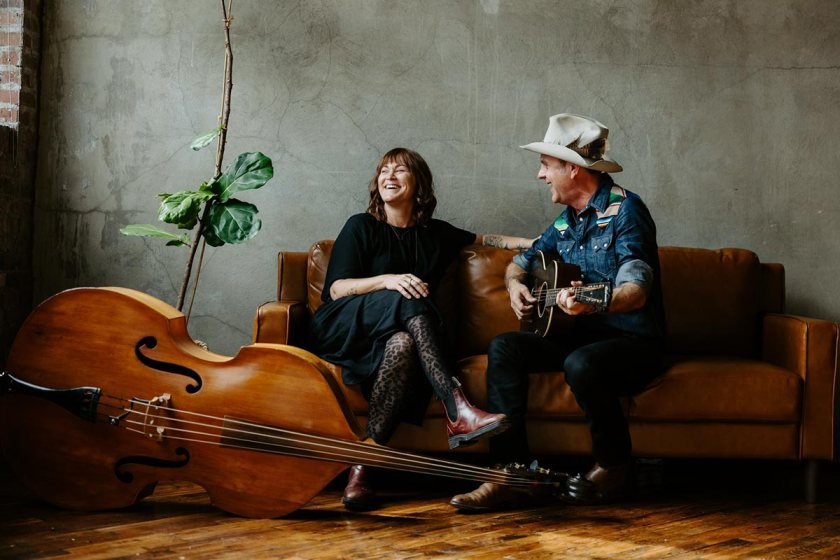
Doug and Telisha Williams of Wild Ponies have a family now. With traditional procreation not an option for them, they turned to adoption and fetal embryo transfer to get their children River and Iris. Dreamers, as an album, documents this process along with the joys, pains, and anxieties of being responsible for tiny lives. 

“We looked at it like a quest like Legends of Zelda,” Doug said. “It didn’t matter what you had to do to get the parts, but you had to collect the pieces to make a family.”

As much as parenthood has changed their day to day and touring mindset, it’s also changed them.

“I’m up a lot earlier than I used to be, but it’s really fun to watch them learn and pick things up and think things out and interact with each other,” Doug said. 

”It’s also beautiful to see your partner — we’ve been together since we were in high school — and it’s been such a beautiful experience to see Doug as a dad,” Telisha added. “He’s a great dad. He’s so patient and so quick to do the most fun things. I’ve known Doug most of my life, but now I’m seeing this whole new human.” 

The anxieties and pains of parenthood are ever present on this album. Few songs will ever hit quite as hard as “Love You Right Now,” a description of caring for a foster child right before they’re due to be moved. Small sweet memories like making breakfast have to be stretched a lifetime. And yet, you can’t think about preserving them in the moment.

“I think the trick to doing that is not having an attachment to that particular outcome,” Doug said. You’re focused on the future instead of not letting it slip away.”

The foster process resulted in the couple and their partner Laura getting to keep their son River. But it also produced some heartbreak, like when the government came to place a child a week earlier than expected. Suddenly, the family had a few hours to say goodbye. 

“What a zen experience it is to foster, because you just don’t have a lot of information about the history  on these kids and you also have no idea what their future holds,” Telisha said, admitting that she regularly cries when performing “Love You Right Now.” “You have no idea how long they’re going to be with you. I had to be all in in every moment that we did have them in our care.”

The family is still in touch with that child and speak glowingly about where he ended up. 

“It’s a complicated grief, because I’m so thrilled that it’s working out for this kid,” Doug said. “But you can’t help but to grieve a little bit for someone who’s not going to be in your life in the same way anymore.”

Other anxieties and sorrows are present throughout. “Bury The Young” was written in response to school shootings, and gun policy is just one reason the Williams thruple are considering leaving Tennessee despite loving Nashville.

“We live in a state where when we had a big school shooting in our city, our governor and state legislature super majority decided that the best response was not to get guns out of schools, but instead to pass laws to allow the teachers to open carry in the classrooms and require firearms training for the students,” Doug said. “It’s just weird to look at the rest of the world and see what works and to see folks in America moving in what’s so clearly the wrong direction.”

The fetal embryo transfers had their own issues. Though Iris is alive and well, their first attempt didn’t take. 

It’s a bittersweet context to the song “Heartbeat,” where Telisha is thrilled to hear new life developing within and holding as tight as she can to it.  

In Tennessee, where abortion, drag queens and certain books are regularly listed as among the top threats to kids, this queer family is giving their all to making foster children feel loved and finding any way possible to bring life into the world, even if it meant the baby shared neither of their DNA. Iris has genetic siblings, just with different parents giving birth to each one. 

“It came with a community,” Telisha said. “It came with a whole other set of people who get to be a part of our family.”

The joys, the unconditional love, the hanging onto memories and tradition, those feelings make up just as much of the album as do the difficulties. It’s an honest album that captures every high, low, and nuance in between. It tells a truly unique story authentically and should be heard by all perspective parents, even those seeking a more traditional experience. In the end, it’s a later track that sums up the Williams’ determination that somehow overcame all the harsh realities stacked against them.

“Wind, love, and water go damn well where they please,” Telisha sings. By embodying that love, Wild Ponies completed their quest and elevated themselves to the status of force of nature.

Above is the full episode as aired on WUSB’s Country Pocket, including both my interview with Wild Ponies and the songs we discussed, starting with Love You Right Now, which details a hasty goodbye to a foster child and regularly produces tears for the band at live performances. The interview begins with the second video in the playlist. You can hear the show live every Tuesday at 12pm on WUSB 90.1 FM or check the blog to watch it as a YouTube playlist. Visit http://www.WUSB.fm and https://www.wildponies.net for more. Photo by Laura Schneider.

Posted in Uncategorized

Kevin Gordon Looks Back On His Youth With Understanding And At Society With Dismay On The In Between

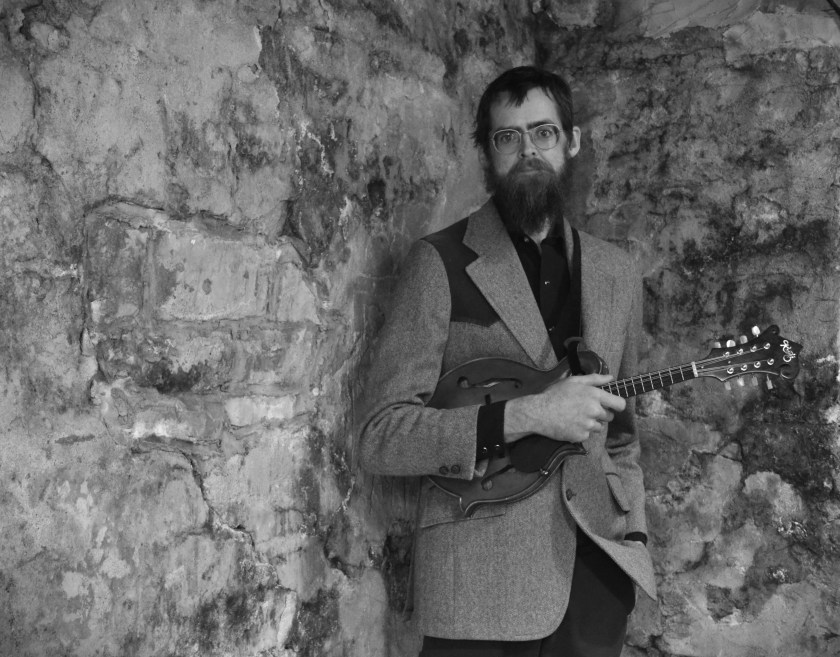
Middle age is supposed to bring about a crisis. For Kevin Gordon, it brings about more reflection than confusion. “The In Between” is a record that lives as much in the past as the present and often documents the change, or lack there of, that Gordon has seen in his lifetime. Most admirable is Gordon’s refusal to look back with nostalgia or harsh judgment of any individual. While he certainly takes issue with society’s slow progress on civil rights, he treats every person in his musical memoir, himself included, with understanding.

“The In Between” and “Simple Things” both revisit the pandemic to very different results. The pandemic has been over for a couple of years now and “Simple Things” is very much a song stuck in that moment of boredom and loneliness. “The In Between,” by contrast, still feels fresh in 2024. Quarantine is one of many things that get a mention as feeling surreal. But the song branches out in so many directions: being a parent with an empty nest, traveling for work and missing time at home, distrust of the government, and yes, the pandemic. Gordon brilliantly describes it as feeling like “Gary Busey playing old Howard Hughes.” 

But somehow that’s not the most memorable part of the adventure. 

“A lot of people I love/I no longer recognize,” Gordon sings toward the end of it. He went through a time of life and a time in history that have been known to produce some powerful feelings and came away with a meditative title track and an appreciation for the fact that certain things aren’t going to feel settled. Others who faced the same disorientation were radicalized.

“It became about the era of Trumpism and Covid. It became about the acceptance of people who I generally considered to be of sound mind latching onto all of the garbage we were being exposed to over that time,” Gordon said. “Some of it is just indicative of what the internet and social media are. I hope we have a little better grounding in terms of being able to accept objective reality.”

Those feelings of regret, being lost, and watching the world change for the worse remain relatable well after businesses reopened because society still hasn’t returned to what used to feel normal. Making peace with the fact that it’s going to keep feeling weird is a uniquely powerful and mature statement. And bringing up a lost jar of secret money seems to emphasize that keeping all inside won’t do any good.

“Tammy Cecile” also captures that in between phase beautifully. “We had the requisite breakup sex” is a hilarious and sad line about, according to Gordon, “the tragicomic nature of that point in a relationship where all parties involved know it’s an absolute mess.” 

During our conversation, Gordon expressed some hesitancy about including information about Tammy’s suicide attempt. He ultimately decided to include it to show the full scope of the situation he was in. It didn’t feel exploitative to me; the song ends with what seems like a very genuine “I hope you’re better now.” 

Songwriters have to make difficult choices sometimes about what details of their life they reveal. What heals one listener dealing with a similar situation can hurt the person it’s about. If the ethics are unclear, the intention isn’t. Gordon is first and foremost a story teller. And the fact that Gordon revealed his deliberations without prompting is just one more example of the honesty and thought that power “The In Between.” 

After all that, it’s quite ironic that one of the better songs on the album relies on Gordon refusing to accept reality. “You Can’t Hurt Me No More” is a song about someone who, in fact, can quite easily tear the narrator to shreds. As the descriptions of pain the narrator “isn’t” experiencing get more specific and elaborate, it becomes increasingly clear that he’s indeed feeling every last bit. 

“At its worst, that sort of vulnerability feels like something you can’t get away from,” Gordon said. “Something that you’re doomed to.”

It’s an odd fit on an album that’s mostly honest, mature, and probative. “Love Right” works because Gordon is drawing from life experience and recognizing mistakes without questioning anyone’s motives. It’s hard to complain about two great songs, but the shift in reliability of the narrator does make “You Can’t Hurt Me No More” feel like more of a single than part of the same work that dealt with situations with the reliability and nuance of the first nine tracks.

“Keeping My Brother Down” and “Marion” are the two protest songs on the album. The former is furious about police killings and racism and is most compelling when Gordon describes feeling the burden of these injustices as being his to bear as a white man. 

“A lot of people who come from my neck of the woods meaning the south prefer to cast that responsibility off saying ‘that wasn’t me,’” Gordon said. “I spend some time on social media looking at statements of people I went to high school with and I’m just astounded by the relative blindness.”

The latter is sad and sweet. Gordon’s attempt to understand a gay resident of his hometown comes with a heavy dose of hindsight and a recognition that Marion’s hopelessness was very much a feature of the government that was supposed to be protecting him. “Reagan won,” Gordon says to start a verse. He describes the havoc wrought by the AIDS virus and in one of the most devastating two word political take downs you’ll ever hear, repeats those same words: “Reagan won.”

While Gordon says the awareness among some white people has greatly improved since his childhood, he still recognizes troubling signs in increasingly extreme rhetoric. With the election coming up soon, it’s hard not to feel like everything is somewhere in the in between. 

Above is the full episode as aired on WUSB’s Country Pocket, including both my interview with Kevin Gordon and the songs we discussed, starting with Keeping My Brother Down, in which Gordon confronts a long legacy of police brutality done in the name of his race. The interview begins with the second video in the playlist. You can hear the show live every Tuesday at 12pm on WUSB 90.1 FM or check the blog to watch it as a YouTube playlist. Visit http://www.WUSB.fm and https://kg.kevingordon.net for more.

photo by Jacob Blickenstaff

Posted in Uncategorized

Having Mastered Her Craft, Kim Richey Describes Strained Communication On Every New Beginning

It feels like Kim Richey has been writing and performing folk music forever, but she’s still improving her craft. The 2018 song “Chase Wild Horses” was an impressive feat. The sadness of surrender and the security in having found wisdom played against each other beautifully and Richey seemed to shine in building urgency without losing any of the melancholy that’s always been among her most appealing traits. 

Every New Beginning is a continuation of the catchiness, tempo, and mixed emotions. It’s Richey’s most melodically pleasing album to date and consistently addresses topics with intelligence and specificity. Even on the songs that don’t quite dive as deep, such as “Joy Rider,” stick to their mood and work as entertainment.

The most interesting tracks on the album both have to do with strained communication. “The World Is Flat” is slower, darker, and more discordant than the rest of the album and I mean that in a good way. It’s a painful track about a relationship truly having run its course. High, icy piano notes and lines like “the best we can do is try to be civil” nail down the mood before a strumming guitar build the song into a slightly easier listen. It’s one of Richey’s older songs, and one she resisted recording for a while. 

“I never recorded it because it just seemed too sad to me. I know I write a lot of sad songs because they’re comforting to me, but there’s always some hope or defiance” Richey said. “But that song, the singer just seems to have given up.”

While it fits our current political mood about as well as “Floating on the Surface,” Richey is hesitant to say we’ve come to the edge of the map as a society. That would absolutely be too dark for her. 

“Floating on the Surface,” is her read on the larger picture. The song takes its name from the surface level conversation that seems so necessary at times.

“With our political environment right now, there are certain people who are friends or family and politics might not be the best choice of topic,” Richey said. As for attempts at healing, she said “it’s getting harder, but I think there are a lot of people making an effort.”

The metaphor extends deeper as she describes our relatively peaceful way of life as calm skies while all the while “we drift on the current and we never look back.” Richey herself is hesitant to dive to the bottom of the sea and try to have a conversation across the aisle, though she does enjoy podcasts that approach those tough conversations in a respectful manner. 

“Truthfully I try to steer clear, mostly,” she admitted. “It’s the most fun talking to people who believe the same thing you do.”

“Goodbye Ohio,” with its impeccable bridge, also describes a drifting apart with a chill settling in and a curtain-like night, though it at least implies that good things can come from moving on by virtue of all the time that’s passed. 

The closest thing Richey presents to an antidote for all of this is warmth and understanding. It’s not a solution but still damn good medicine. “A Way Around,” is a song that functions as a hug that sounds unusually saccharine for Richey with its gentle harmonies. Instead of fighting the blues, it recommends listening to a sad song. 

“I think I wrote that chorus a little bit to myself,” Richey said. “I like how the song says I know how you feel. It’s just nice to have somebody say ‘I get it’ instead of giving advice and trying to tell you how to fix something. A lot of when you’re not in the best possible place you don’t want somebody fixing you. You just want to feel heard.”

Perhaps that’s why “Feel This Way” works as well as it does for a late album song. It’s pure understanding and acknowledgement than healing takes time. Our tense society can’t last like this forever. It’s unsustainable. But it’s still hard to see the light at the end of the proverbial tunnel.  

“It hurts like it’s always gonna feel this way/it don’t help knowing that it won’t someday,” Richey sings. 

While “Every New Beginning” certainly describes some strained communication, it’s clear that Richey can sing exactly what someone who’s hurting needs to hear.

Above is the full episode as aired on WUSB’s Country Pocket, including both my interview with Kim Richey (who somehow actually came on my show) and the songs we discussed, starting with Floating On The Surface, which captures our tense mood around politics. The interview begins with the second video in the playlist. You can hear the show live every Tuesday at 12pm on WUSB 90.1 FM or check the blog to watch it as a YouTube playlist. Visit http://www.WUSB.fm and https://kimrichey.com/news/ for more.

Posted in Uncategorized

Laurel Lewis Debuts With Album of Impactful Stories

Laurel Lewis’ self-titled debut has a certain heaviness about it. Her deep vocals mean most of the instruments around her have to come down an octave as well. Producer Rodney Crowell wisely allows Lewis’ vocals to convey more emotion than the relatively sparse backing band on her slow-paced tracks. Combine that with topics such as harassment, loneliness, addiction, and domestic violence, and the mood is dour.

Heavy isn’t a bad thing. Roots music has long served as a form of therapy. And while these laments aren’t exactly high and lonesome, they don’t miss their mark. Lewis’ lyrics progress as stories and few words are wasted for the sake of a rhyme. It’s not dancing music, but the quality of this record is unmatched on a cloudy night.

Lewis herself is significantly cheerier but just as thoughtful as her lyrics suggest. She joined Country Pocket to discuss the debut, including a song called “Imaginary Lover” she wrote as a teenager. It talks about the benefits, and hollowness, of going on dates with strangers that are more about a good time than any sustainable form of happiness.

“I felt left out compared to other people in terms of not having a partner,” Lewis said, defining an imaginary lower as “someone that you cling to for the night to satisfy your craving of wanting to be desired.”

That mix of hedonism and satisfaction is well established in lyrics that flash from self-destructive in the verse and putting a positive spin on things in the refrain.

“Consistently going out and finding people to essentially numb the pain is going to get tiring and overwhelming,” Lewis said. “Not having a constant in your life, I’ve found, is quite difficult.”

For the first track of her album, Lewis addresses catcalling. As a woman who frequently travels and visits bars to support her music career, she unfortunately has her fair share of experience with the subject. 

“Women are constantly judged for their bodies. For some reason, there are some people who feel it’s okay to make negative comments and weird remarks and faces about women when they don’t even know that person,” Lewis said. “I’ve been judged for my looks, good or bad. It’s difficult.”

The secondary concept of the song, that patience can erode over time regardless of how many different men are doing the catcalling, can apply to many a situation. And though the contrast between a woman having to work to control internal emotions like forgiveness and men not even attempting to regulate external behaviors is telling, Lewis seems to have come to the concept of her song genuinely.

“I want to forgive those kinds of people because I want to be the bigger person,” she said. “It’s hard to hold grudges against several people for your entire life. Even if it’s not the same man doing it every time, when that situation keeps arising, it just becomes extremely difficult to brush it off. It weighs you down so much.”

In addition to sharing how the situations have made her feel, Lewis criticizes these types of men for lack of self control and uses empathy to try to reach them. Still, she said she’s not interested in being the one to have that conversation with them. Men who catcall are not the most approachable or predictable bunch.

Lewis called writing about addiction leading to death as a tough decision, but it produced her most remarkable track.

“I’ve seen how it can destroy things so quickly,” Lewis said. “I felt compelled to use the information that I’ve gathered throughout the years. It affected me so greatly that I needed an outlet to express the suffering that I endured throughout years of my life”

The lyrics include flashes of the alcoholic’s personality and roller coaster relationship with his substance of choice, but perhaps more interestingly it looks into the mind of the bartender relaying the story. When she discusses the moral injury that comes with serving alcohol to desperate people night after night and watching their deterioration play out, it’s clear to me as someone with an addict in their life that Lewis suffered through much the same thing.

Also compelling is “Family Woman,” where Lewis both rejects the notion that she’d ever want to settle down with kids, but leaves the door open to it if “there’s freedom in the breeze.” She instead opts to chase “the bigger things in life” and in our conversation, said for some people who pursue certain lifestyles, having kids would “diminish their light a little bit.” 

“I have a few child free people in my life who I really look up to and I’ve asked them before do you ever want to maybe consider a family route, they’re like ‘nope, I’m good, I’m happy being me and having my own time. Anyone who wants to do that, absolutely excellent, go for it, but personally it’s not for me,’” Lewis said.

As you might imagine, she’s not a huge fan of the term “childless cat lady,” but doesn’t hold anything against people who want to have kids or even rule out the future for herself.

“Whatever my decision might end up being, it’s okay. The beauty of it is it should be a choice.”

Above is the full episode as aired on WUSB’s Country Pocket, including both my interview with Laurel Lewis and the songs we discussed, starting with Room Without A View, which hews closely to trauma Lewis experienced in the past. The interview begins with the second video in the playlist. You can hear the show live every Tuesday at 12pm on WUSB 90.1 FM or check the blog to watch it as a YouTube playlist. Visit http://www.WUSB.fm and https://www.laurellewis.com for more.

Posted in Uncategorized

Stephanie Sammons Becomes Whole After Time and Evolution

“It was like everything I was raised to believe in and thought was true was picked up in a tornado and thrown out into a foreign land,” Stephanie Sammons said of discovering she was queer in a faith-based community. “It was a very cataclysmic event for me.”

On Time and Evolution, Sammons documents a difficult growth process that took her from evangelical in her faith, to queer and questioning, and finally back to a more healthier relationship with the Almighty. While the album is meditative, personal, and largely positive, Sammons does feel some anger toward those who took a message of love and charity and turned it into something uglier.

“The Evangelical Christians have hijacked everything,” Sammons said. “Even Christianity itself. The church, the Bible, the country. And if you don’t share their exact world view or share exactly how they think, then you’re evil and you’re going to hell. To me, that’s a message of discrimination, it’s preaching hate, and it ultimately leads to death. Physical death or the death of someone’s soul.” 

Nowhere does Sammons better illustrate the dichotomy of those views than on “Billboard Sign.” In addition to detailing having to leave her family, Sammons reminds us all that the Bible has more to offer than evangelicals might seem to think. It simply has the words “Jesus Saves” written on it. It’s a brilliant reminder that the Bible is more about forgiveness for imperfections than the punishment of them. If Jesus is as described in the good book, would he not save both Sammons and her family? The disgraced preacher may well be entitled to forgiveness as well, depending on where he goes from here. The theme of the Bible, as a work of literature, is hardly the minor commands that take up a couple of sentences. 

It’s a tricky song to write while still attempting to maintain a relationship with the subjects. 

“I do listen to the other side, globally and within my immediate family. I don’t want conflict. Maybe this is why I put it into song. It’s my way of expressing my feelings about these things versus just having an outright heated conversation. And believe me, there are members of my family who are really gunning for that.” 

“Year of the Dog” captures an interesting mix of appreciation and resentment for the people in Sammons’ life who both helped her grow, gave her a roadmap to salvation, and eventually showed her that love isn’t unconditional. It’s a useful song for queer listeners who have complicated feelings toward their family or first love. It gives you an idea of why Sammons stays in touch with her family but refuses to engage them in certain ways. She’s able to tolerate a little abuse without having her core beliefs shaken. Her relatives, too, have to take on a little discomfort to make the relationship work.

“We are all worthy of being here, Sammons said. “We are all worthy of the beliefs we have.” 

“Innocence Lost” is perhaps the most affecting song on the album. It starts with the stunning image of a young Sammons shooting a bird out of a tree and suddenly having to grapple with a whole new set of emotions.

“She’s looking up at me blinking her eyes and then she dies,” Sammons recalled. “I witnessed the death of this beautiful creature and I didn’t realize the magnitude of what I had done until I saw it happen. Now I don’t care about roaches or things like that, but I realized I’m an empath, almost to a fault, and I think a lot of songwriters are.” 

Sammons brilliantly describes the shame of losing her first queer relationship — the one she sold her soul for, according to her religious upbringing — before coming to terms with all of it.

“Blind faith that’s shaken by the truth/ is like seeing the stars instead of the moon,” Sammons sings. And as Sammons opens her mind, it’s clear she’s finding love and peace from realizing there are other truths out there in the universe, including hers.

Our discussion came around to recent attacks on the LGBTQ community Sammons and I are a part of from the right-wing faith communities she left. Sammons revealed that when her wife tunes into the nightly news, she leaves the room to avoid exposure to political stunts designed to inflict pain. She’s aware it’s bad, but hasn’t given up yet.

“We at least currently have the freedom to decide and be who we are,” Sammons said. “It’s not 100% safe for many people, by a long shot. But I don’t think we can give up. I think it’s destructive to individually be consumed by everything going on around us that we have no control over. It can be soul crushing.” 

When Sammons asks “How will we ever mend?” on her album, it’s a question she offers no answers to. The question of her faith, however, resolved. 

“Holding on to Jesus” is unlike the rest of the album in that Sammons doesn’t feature as the main character. It’s a heartwarming tale of an older married couple who get by on their faith and love in each other. Considering the album started with a song expressing doubts about both, it’s a strong message to send. Despite all the difficulties her rift with her family caused, Sammons is keeping the faith.

Above is the full episode as aired on WUSB’s Country Pocket, including both my interview with Stephanie Sammons and the songs we discussed, starting with Billboard Sign, which reflects on what should be the non-controversial statement “Jesus Loves.” The interview begins with the second video in the playlist. You can hear the show live every Monday at 11am on WUSB 90.1 FM or check the blog to watch it as a YouTube playlist. Visit http://www.WUSB.fm and https://stephaniesammons.com for more.

Posted in Uncategorized

Creekbed Carter Shines with Profound Transformations and Quirky Humor

Creekbed Carter Hogan pulls off many transformations on his self-titled album. One minute he’s imagining that he’s a gun or an apiary and the next he’s a scorpion or tumbleweed. While it’s not unusual for a songwriter to step outside themselves and take on another perspective to tell someone else’s story, Hogan seems to be diving deeper into his own and his relationship with the world around him. 

“If I Was” is a hypnotic heartbreaker that quite reasonably imagines he’d be given more care and value as items like a gun, a coin, or a doll. It’s a completely reasonable assumption on both a personal and societal level. Laws and rulings in recent years have shown immense preference for the rights of guns, gender norms, and big money, especially when compared with a trans Texan. But there’s also a smaller scale truth to be gained here. We all know the hobbyist who devotes a little too much time to loving something that can never truly love them back. Say, an impressive folk music collection. It can’t feel good to be the human being also vying for their attention. Hogan wrote the tune with his father in mind.

“It’s a very capitalist relationship,” he said. “As long as I’m a product that can do what he wants me to do and be what he wants me to be, we have a relationship. But when I’m not doing those things, there is no value for me. It’s a very cold way to describe it and it’s a very cold feeling.”

“Lord, Make Me A Scorpion” relies on a similar device. Hogan asks for divine intervention to get over someone. He sees strength and the ability to move on in the desert environment around him. It’s a ruggedness that few introspective folkies possess, but the observations are gorgeous. A thunderstorm as a good cry. A rattlesnake as a fresh start. It absolutely works as the most traditional song on the album. Hogan thanked teachers in their life for helping them see value in everything.

“They taught me to see beauty and communication and language and interest and value in everything.” Hogan said. “I think a lot of that is indigenous knowledge. As a white person who grew up in Oregon, there were animals that were good and animals that were bad. You were afraid of the bad animals and protected the good animals. When I think about scorpions and rattlesnakes, they’re extremely beautiful objectively. They’re so interesting, they’re so resilient. I think being curious about the world is how you find value in everything.” 

“Sycamore” feels like the most personal track on the album. The trans songwriter discusses the struggles of trying to conform to gender roles for the sake of others with a delicate touch vocally. It’s a powerful contrast between the first “prayed for the day to be over” to the last “form of eternity.” The former is perhaps sweeter and more feminine than Hogan usually presents and the latter is a beautifully placed sour note, perfectly imperfect. Queer folk fans are going to feel that growth and share in the joy.

“I actually think most of us are outside in some small way.” Hogan said. “I think people are more related to each other in terms out outsiderness than they realize. That fear that someone will discover that outsider quality and lock you out for good is what keeps people separate. I think writing and performing Sycamore is a way for me to present my very small thing at the feet of everyone else and to try as hard as I can to invite them to find their small thing and bring it to the table. 

Creekbed Carter is certainly a more interesting album because there’s another role Hogan plays quite comfortably: the quirky humorist. “Through With Lovin’” is almost more comedy act than musical performance with its silly lyrics, tempo changes, and ability to skewer both form and self. “The Relic Song” is a similarly-styled history lesson that takes aim at the medieval church. Hogan grants the corrupt practices a measured amount of legitimacy while throwing in a Pokemon reference. There’s definitely some provocative intent behind this one, but it’s lighthearted enough to only offend those looking to be offended. The two tracks are certainly outliers in terms of the tone and depth of the album but are almost perfect for closing out a radio hour with a laugh. 

Above is the full episode as aired on WUSB’s Country Pocket, including both my interview with Creekbed Carter and the songs we discussed, starting with If I Was, which has some profound and upsetting things to say about value. The interview begins with the second video in the playlist. You can hear the show live every Monday at 11am on WUSB 90.1 FM or check the blog to watch it as a YouTube playlist. Visit http://www.WUSB.fm and https://www.creekbedcarter.com for more.

Posted in Uncategorized

Ismay Leaves Behind Dopamine and Ranch Life for the Real World on Desert Pavement

Ismay is ready to face the real world. The non-binary ranch hand turned folk singer may have spent a lot of time with animals and streaming television during the pandemic, but they’re now fully focused on a music career and learning how to cope with well, everything. 

Desert Pavement makes a strong argument for trading in vices and isolation for genuine experiences. It comes with an appropriate overhaul of Ismay’s sound. What on previous releases used to be almost monasterial finger picking has become more accessible strumming. If Ismay means to encourage more interaction with others, that’s a strong first step. 

It’s also an album deeply rooted in nature and ranch life, which makes sense for someone who spent a decade working more closely with animals than fellow people. One of Ismay’s great strength is capturing an animal’s point of view, be it the nervous shrew, curious raccoons, or shy coyote. That level of understanding makes them full characters in a song and turns something oriented in observation into relatable actions

“When you work on a piece of land you have to understand what you’re surrounded by from its own perspective in order to know what you’re doing,” Ismay said during a WUSB interview.   

Ismay takes a similar route to understanding people. Interestingly it was reading about dopamine that sent them in the direction Desert Pavement ultimately took. Ismay came to realize just how unnatural smartphones and instant gratification has made modern life and how much we rely on vices to numb discomfort. 

They explained that while everyone is entitled to some enjoyment, something becomes a vice when it’s used to fuel disengagement. Ismay used their own love of television comedies as the basis for “Streaming Family,” which showed someone relying on the company of a work of fiction instead of actual people. 

“We’re isolating ourselves and numbing our feelings it’s because it’s overwhelming to accept and address the complexity of the real world,” Ismay said. “I think that we nowadays don’t spend as much time with other people or being bored. We don’t spend enough time allowing our emotional waves going up and down. I have to be more willing to deal with the emotional roller coaster of being a person.” 

It speaks to how developed Ismay’s ideas were that they also included somewhat of a counter argument on the album. Some characters, especially the shrew becoming exposed to predatory birds and the family encountering a “Stranger in the Barn” are going to face genuine danger in the process of opening themselves up to the real world. Sure most of it will come in the form of stress and disappointment and we as people don’t have to worry about birds swooping down the eat us, but the discomfort can be real. It’s something Ismay certainly understands as an artist who’s performed before audiences and a panel of reality show judges. 

“I’m not really the most intrinsically confident person,” Ismay said. “Getting to see myself on those platforms talking about my lack of confidence was an opportunity for me to realize that I had to move past these insecurities and grow into the person that I really wanted to be.”

“Stranger in the Barn” winds up being about a drifter who just needed some shelter and was friendly to his unwitting hosts. The song is a parable meant to show that the unknown isn’t always scary, but even people without social anxiety know that situation can end up badly.  

“I would hope that my best self would go out and deescalate the situation, but I’d probably freak out,” Ismay admitted.  

Luckily there is, for most of us a place between befriending intruders and relying on the canned laughter of a sitcom for company. A place that can grant us the enjoyment a vice brings without relying on it to the point we can’t ride the wave. And while Desert Pavement points quite clearly to those lessons, I’d urge listeners to take note of the way understanding the perspectives of ranch animals makes for rich, positive interactions. That might have some applications for people too. 

Above is the full episode as aired on WUSB’s Country Pocket, including both my interview with Ismay and the songs we discussed, starting with The Dove, the Shrew, & the Raccoon, which does a pretty good job of capturing animal personalities. The interview begins with the second video in the playlist. You can hear the show live every Monday at 11am on WUSB 90.1 FM or check the blog to watch it as a YouTube playlist. Visit http://www.WUSB.fm and https://www.ismaymusic.com for more.

Posted in Uncategorized

Kelly Hunt Uncages Her Longing Heart For An Ozark Symphony

Kelly Hunt may never have lived in the Ozarks, but the Memphis native named her latest album Ozark Symphony after the mountain corridors she often travelled through to Kansas City. 

The song is almost a ghost story, though no one in it is dead. Instead her love seems to haunt the mountains where the object of her affection was from. She claims to have taught the song to the trees and mountains and wind so they could pass it on. Profound longing, changing locations, and emotions displayed for the world to see are all major themes of the album.

“I’m a creature of longing by nature,” Hunt explained. “I’ve always been a very nostalgic kind of person. I grew up in Memphis. I lived there until I was 18. I’ve not moved back, and I don’t want to move back because I actually like missing it and coming back to it and feeling that homecoming.”

Another track, “Everybody Knows,” addresses her tendency to declare what she’s feeling to the world. She’s basically chosen to explain herself through song as a career.

“It’s such a therapeutic thing,” said Hunt. “It feels like a constructive use of something that is painful or hard. If I didn’t have that, I don’t know what I’d do without that. But also, I think it’s a privilege to be able to enter people’s lives that way and maybe help them navigate the emotions that we all share.”

She does admit that there’s a downside to regularly telling her story.

“Part of the cost of the job is that you have to tap back into those places,” Hunt said. “You have to keep the wound open to a degree.”

In addition to singing from the heart, Hunt also sang from the perspective of the heart on standout track “My Own Civil War.” Based on a famous letter by Thomas Jefferson, the lyrics use universal themes and are delivered so sincerely that they feel as autobiographical as the rest of the album.

“I want to understand things, I have a curiosity about things, but also I’m a deeply feeling person,” Hunt said. “I feel like I’m often at odds with myself.”

The image of the brain locking the heart in a cage is both powerful and biologically accurate enough to make my brain chuckle and my heart cry out at the injustice. 

“I want to have a free heart, but also a free and open mind,” Hunt said, indicating that a balance is preferable.

Although I’m pretty sure my head is dominant, my heart can win out in sadder moments. The highlight of my conversation with Hunt was bonding over the way we both often spend time quietly imagining things. We also both may get just as much out of interacting with art as we do people.

Hunt recalled interacting with art and thinking “I feel like I’m feeling what they’re feeling. That sense of connection, of I’m not the only one who thinks this way or feels this way, those are very powerful moments.”

Above is the full episode as aired on WUSB’s Country Pocket, including both my interview with Kelly Hunt and the songs we discussed, starting with Ozark Symphony, one of the tracks I appreciate for its quiet intensity. The interview begins with the second video in the playlist. You can hear the show live every Monday at 11am on WUSB 90.1 FM or check the blog to watch it as a YouTube playlist. Visit http://www.WUSB.fm and https://www.kellyhuntmusic.com for more.

Posted in Uncategorized

Harvest Thieves Chart A Righteous Path Through Hucksters And Insurrectionists

I’ve heard quite a few musical takes on the January 6th insurrection, but Cory Reinisch is the first to write it as a love song. It was an audacious move, but it worked. 

The idea behind “Empire Falls” is that as we quite literally got to watch society crumble on the news, our thoughts would turn to loved ones. How to comfort and protect them. How even in the darkest of times, the ones we love make fighting for a better life worth it. The absurdity and brutality of that day contrasted with the simplest family values makes for a surprisingly effective commentary on the whole mess.

“Of course that happened,” he said of the insurrection.  “Maybe we didn’t know exactly what it was going to look like, but we knew something like that was going to happen. It feel like there’s not much we can do to stop this tidal wave of horseshit. But at the end of this, at least I have you in my life. I thought that was a nice sentiment, a little bit of light in some darkness.” 

Reinisch is clearly passionate about politics. Seemingly forgetting that our interview was set to air on radio, he cursed quite a few times about the hucksters and wannabe despots who make up so much of our political conversation.

“I’m fascinated by our inability to parse out bullshit,” Reinisch said. “I think we let the devil in the door and now we don’t know what to do with it,” he added, mentioning Donald Trump as an inspiration for the song “Birth of a Salesman.” 

Much of the album focuses on extremes. There are examples of virtue: The values of “Good Man’s Countryside,” the solid foundation of “McCulloch County Wind Chimes,” the magic of witnessing someone in their “Golden Age.”  There are of course the villains of “Empire Falls” and “Birth of a Salesman,” not to mention an ex in “Gaslighter” and crooked preachers in “Cadillacs in the Sky.” It’s a lens he applies to the Trump movement, at least at this point. 

“I truly believe it was with the best of intentions that support was thrown behind this movement at first because it came out of frustration,” Reinisch explained. “Over time, I think there started to be a darkness. It started to be a vengeance ideology.” 

As to why the people who value freedom the most are putting their votes behind eliminating so many personal freedoms?

“I think it’s because they’re too far gone,” Reinisch opined. “It’s not a rosy thought but this movement has gone beyond one man. It’s just anger and revenge.” 

“Friendly Fire” is the most effective song outside the political tracks. It details Reinisch’s refusal to follow a traditional path, stating that it took a unique mix of self sabotage and determination to put him on the path to a music career.

“I’ve had to deal with raised eyebrows and questions my entire life, and that’s fine,” said Reinisch, “I was always going to do what I was going to do.”

As The Sparks Fly Upward documents problems in our society from lying and corruption to glorified political violence and cruelty. But it’s in tracks like “Empire Falls,” “A Good Man’s Countryside,” and “Friendly Fire” that Reinisch presents an imperfect solution: hold tightly to your values and goals and focus on the ones you love. The metaphorical fires are unlikely to stop burning soon, but it’s still possible to focus on and ultimately do the right things.

Above is the full episode as aired on WUSB’s Country Pocket, including both my interview with Cory Reinisch of Harvest Thieves and the songs we discussed, starting with Birth of a Salesman, which may or may not be about a certain president. The interview begins with the second video in the playlist. You can hear the show live every Monday at 11am on WUSB 90.1 FM or check the blog to watch it as a YouTube playlist. Visit http://www.WUSB.fm and https://www.harvestthieves.com for more.

Posted in Uncategorized

Rachael Kilgour Shares Her Memories and Mourning Process on My Father Loved Me

Rachael Kilgour sings in whispered tones at times on several tracks of My Father Loved Me, and it fits.

She delves into sensitive topics in her family’s history and psyche on the album so it makes sense that she’d approach them delicately. It also works in that she’s creating an intimate connection with the listener as she goes through her inherited insecurities and experiences with her father as his dementia progressed. 

But for all the raw nerves the album touches on, Kilgour sees it as a medium for healing. Due to her father’s progressing dementia, Kilgour struggled to get to know her father as an adult and uncovered a lot doing research talking to her family for this album.

“I wrote the songs to get to know Dad, to say goodbye to Dad, but it’s also about me, about figuring out why we’re alive, and I don’t think there’s a way to do that without talking about the hard stuff,” Kilgour explained. 

Throughout the record, Kilgour acknowledges that there were some complications in her relationship with her father. His depression and her parents’ separation took a toll on their relationship. There was a car crash they were involved in. And there were the demons she inherited from him. 

When it comes to her low self esteem, “the torch has been passed,” Kilgour said. “I think it’s a little bit of a mixed message when parents love and support us so well but struggle with their belief in themselves.” Of the title track, Kilgour said “It feels like a little prayer every time I sing that song that I’m getting better at figuring it out and loving myself.”

A particularly powerful moment on the album comes in Dad Worked Hard. Kilgour questions a lot about how the world works through the lens of watching her family struggle financially as injury and dementia forced her father to retire and to require care.

“He was humiliated by it, I think,” Kilgour said of her father’s aging process. “It’s a common thing for men of that era. Slowly, Dad couldn’t do the physical work. He couldn’t provide for his family. It was really hard to watch him struggle with it. I think had he accepted it, it would’ve been easier.”

On an album that’s primarily mournful, reflective, and appreciative, Kilgour’s anger at the fact certain treatments for her father were out of their financial means stands out. She seems able to reconcile her father’s suffering when it comes to mental and physical conditions, but she views society as more at fault for not being structured more fairly.

“I felt that we were making these decisions about his care based on financial limitation, which felt very unfair,” said Kilgour. “It left me thinking about how we value different kinds of labor.”

As her father aged, Kilgour moved to Boston. Soon after, he passed. It’s a topic she still experiences guilt over, even as she acknowledges spending every second with her father wouldn’t be realistic or enjoyable. 

“He felt really comfortable with me and took a lot of pride in spending time with me,” she said. “It’s still hard to think about having denied him of that, I guess.”

Kilgour was able to come home for the last week of his life and be there with her family. She tries to hold onto her father’s best qualities along with the good memories.

“I would like to be a helper in the way that he was. I’d like to be as reliable, maybe not quite as stubborn. And I would love to love the people I love as well as he did.”

Above is the full episode as aired on WUSB’s Country Pocket, including both my interview with Rachael Kilgour and the songs we discussed, starting with My Father Loved Me, which examines their complex but positive relationship. The interview begins with the second video in the playlist. You can hear the show live every Monday at 11am on WUSB 90.1 FM or check the blog to watch it as a YouTube playlist. Visit http://www.WUSB.fm and https://rachaelkilgour.com for more.

Photo by Sara Pajunen