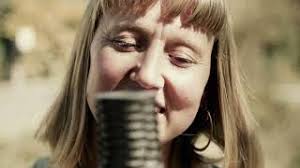
Anna Ling is in tune with something much bigger than herself. It’s natural, scientific, and spiritual. Carefully considered and instinctual. Anyone who listens to Light will understand that Ling has a unique connection to the world around her. She describes the human condition as being part of a mycelium, after the wide-reaching interconnected underground fungi.
What’s remarkable is that even other creatures sense her respect and love for all that’s alive. Sitting in a barn, Ling received a visit on her shoulder from a butterfly.
“The tips of its wings had gotten caught up with cobwebs,” said Ling. “I brought the butterfly onto my hand and spent awhile just taking the cobwebs away from the butterfly’s wings and I managed to take enough of them away that they opened back up again. I took the butterfly outside and it flew away.”
It’s a serene and joyful moment. For Ling, it led to a beautiful piece on love and the interconnectedness of every being. A chance event became an opportunity for her to reflect: “I’m not really good at asking for help. I think that’s part of our hyper-individualized culture. The experience was such a huge gratitude. I felt like this butterfly had trusted me with this huge task.”
It was Ling’s line about mycelium that really drew me in. It’s an obscure bit of knowledge that is only acquired through actively seeking more information about nature. Evolution, the Big Bang, and plenty more ideas more at home in a textbook show up on this fairly artsy folk album.
“I love the imagery in science,”said Ling. “I love science as a creative way of understanding the world. I’m less into the nuts and bolts and more into the way these ideas make me feel.”
On “The Moon,” Ling addresses a relative so distant that she was among the first to leave the ocean: “Daughter of sea/
Grandmother tell me/Did you long for the land/What old song drew you up from the deep?”
Again, Ling starts reaching across the mycelium for connections.
“There are cultures around the world where they know the stories of their ancestors for numerable generations,” said Ling. “I don’t really know my grandparent’s grandparents. That’s kind of where the cutoff is. There’s this incredible mystery that goes all the way back to oneness.”
She describes our one earliest ancestors as prone to kindness: “Some cell that decided to integrate its fellow cell rather than kill it.”
While most would agree that sexuality is part of the natural world, Ling writes as though the natural world is part of sex. On “Limerence,” she writes I am blood I am grit/With my thighs around your hips/I am the waves crashing cliffs/I am tectonic shifts
“Is sexual connection not one of the most intriguing and strange and wonderful part of this human experience?,” asked Ling, who said she often writes in moments of overwhelm. “Most of my most intense experiences have been romantic sexual relationships.”
A standout moment on the album compares a dead seagull tangled in plastic to Jesus Christ. One died for our sins, the other died as a result of them. The fact that we’re aware that life will eventually end is what Ling believes sets us apart from other life forms. Part of wondering about humanity and the natural world is contemplating death.
“The structures that we’re living within will end; I can’t see how they won’t,” said Ling. “But we don’t know what’s on the other side. I feel like we’ve got everything to play for. We don’t have to necessarily nosedive into the sea.”
Ling’s spiritual beliefs, while unconventional, share a foundation with that of many other religions.
“I firmly believe that the core of this being is love and peace and light, said Ling. “We do tend to cover it up very successfully, but I have a great faith.”
Don’t let the lyrics distract you from some absolutely gorgeous sounds. Ling’s vocals range from airy to throaty on “Inevitable,” which would’ve made a sonic impression anyway its African folk instrumentation. The remaining nine songs are mostly rooted in English folk, as one might expect from a Devon artist. There’s something slower and softer about this music, though. The light Ling named this album for is not a harsh sun on a hot day, but one that illuminates and soothes. It’s gently penetrating the canopy on a walk through the forest. It’s just strong enough to see by and lasting enough to keep searching.
Above is the full episode as aired on WUSB’s Country Pocket, including both my interview with Anna Ling and the songs we discussed, starting with Butterly, which demonstrates that even nature understands Anna’s connection to nature. The interview begins with the second video in the playlist. You can hear the show live every Monday at 4pm on WUSB 90.1 FM or check the blog to watch it as a YouTube playlist. Visit http://www.WUSB.fm and https://www.annaling.co.uk for more.



 Country Pocket