Old friends are, for the most part, a bittersweet memory. We keep very few of them for our entire lives and the connections we share with them later on are insignificant compared to what once was.
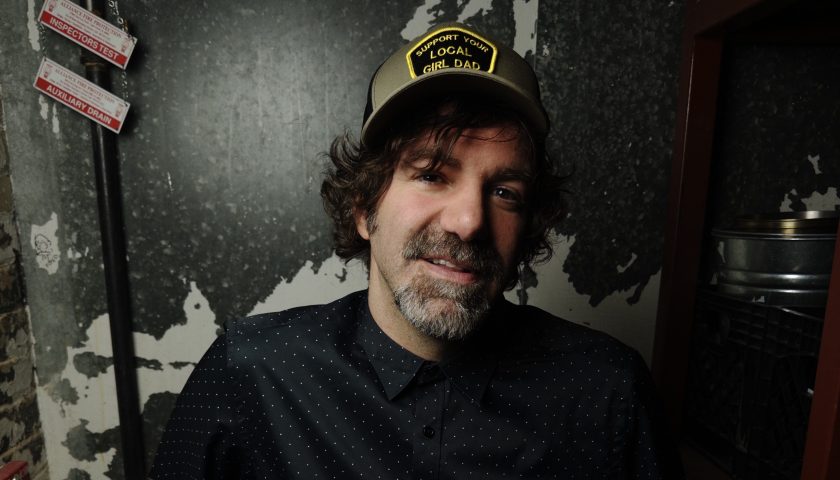
For Stephen Kellogg, that complex form of nostalgia makes for two of his best tracks to date. Deep friendships are hard to come by in the music business.
“I know a lot of people a little bit and I wonder how many people I know on a deeper level,” said Kellogg. “I feel like the system is flooded. I thought you would just amass friends as you got older instead of accepting that some would come and some would go.”
His cowrite with Lori McKenna takes the form of a letter to someone who is not much more than a stranger these days. “Remind me what’s your daughter’s name,” he sings, hinting at just how far they’ve since drifted. The reasons for losing touch often have to do with much more than distance. People grow at different rates and in different directions.
“Sometimes you run into people who it’s evident haven’t experienced as much of a shift,” said Kellogg, remarking that he’s changed a lot in certain respects. “It’s not really meant to be a judgment of one or the other. It’s meant to be the reality of it.”
Kellogg compared old friends to a childhood bed.
“This was a great place to be at that time, but maybe it’s not where you belong anymore,” said Kellogg. “Nothing’s wrong; the bed’s still a good bed. It’s not just where I belong anymore. I feel that way about some people and some people feel that way about me.”
“Waitress” also looks back at an old connection, though this time through the lens of discovering she’s passed away. The strength of the writing is in the matter-of-fact presentation. There clearly wasn’t a super deep connection between the two; he knows she lived a hard life, but the loss is still shocking. No line is quite as good as “I heard she lost the baby and I always meant to call.” It’s a thorough damnation of the narrator and, sadly, all too common.
“The least busy people I know will talk to me about how busy they are,” said Kellogg. “We all know what it’s like to put off a call that you’re dreading. A lot of calls don’t get made in the name of not knowing what to say.”
Kellogg was luckier than his daughter or folks like me. When he first lost a peer, he was a bit further into life than his teenage years. Still, it’s a strange experience.
“It’s one thing when you lose a grandparent, of course I felt their absence and the sadness, but it’s also the natural order of things,” said Kellogg. “When someone is your own age, suddenly the universe felt like it had a hole in it. I feel like a little piece of me and my legacy and my understanding of the world chipped off. Every person you come across will in whatever increment impact who you become.”
The fact that it’s so easy to keep in touch is a double-edged sword.
“In the old days you could call somebody and assume that maybe they didn’t get your message,” said Kellogg. “These days, you can get a message to anyone and they choose not to interact with you.”
To You Old Friend isn’t the sort of concept album this site generally reviews. “Harbor” is a gorgeous song, but it talks about childhood promises being forever. The songs discussed earlier would certainly disagree with that. Plenty of old friends show up as guest artists, but the first two tracks don’t lead to a lasting theme.
Still, the songs are worth discussing. “Harbor” is the standout, a promise of lifelong support that sounds like it was dreamed up on a porch and performed like it would be a singalong at a live show. It’s a rosy view of old friendship that feels warm and beautiful even if other songs make it seem unlike lived experience.
“Ghosted” and “Old Guitars” discuss relationships that fell apart in ways that left Kellogg with questions and pain. “Buckets of Rain” is an uncomplicated love song; a promise of fidelity during dark times. “Kiss the Ring” is a highly specific tell off that somehow enough detail to determine exactly who is the target. It’s the one real misfire on the album.
“Almost Woke You Up” is a live version of a prior highlight from Kellogg’s songbook brought to amazing heights by the supporting cast. This was done on a Counting Crows tour and Adam Duritz and the band all play on it. Kellogg’s daughters also make an appearance as backup singers. Performed in front of a much larger crowd than Kellogg is used to, the track has incredible energy. It was Duritz who picked out the song and had the idea to bring Kellogg out during his set.
“A lot of times big professional moments don’t live up to the hype because often it can feel too intense and you can’t take it in,” said Kellogg. “It’s one of my all time favorite bands, two of my all time favorite people, and I definitely wasn’t lost in this.”
Kellogg has a lot of respect for Counting Crows for staying true to their style even after achieving commercial success. He admitted that he’s modified his style to chase a hit before and lost out in two ways: it made him feel inauthentic and the hit never materialized.
“A hit is a miracle, but when that happens and you’re not being an authentic version of yourself, you’re saddled with pretending to be something that you’re not,” Kellogg said, somewhat glad he didn’t score a hit by altering his style.
Aside from commercial gains, Kellogg sees a hit as a “mandate” to keep playing with a band. In other words, a perfect excuse for old friends to stick around a while longer.
Above is the full episode as aired on WUSB’s Country Pocket, including both my interview with Stephen Kellogg and the songs we discussed, starting with “Old Friend,” which features cowriter Lori McKenna on guest vocals. It’s exactly the sort of song you’d expect from these two. The interview begins with the second video in the playlist. You can hear the show live every Tuesday at 12pm on WUSB 90.1 FM or check the blog to watch it as a YouTube playlist. Visit http://www.WUSB.fm and https://www.stephenkellogg.com for more.





 Country Pocket