Posted in Uncategorized

Creekbed Carter Shines with Profound Transformations and Quirky Humor

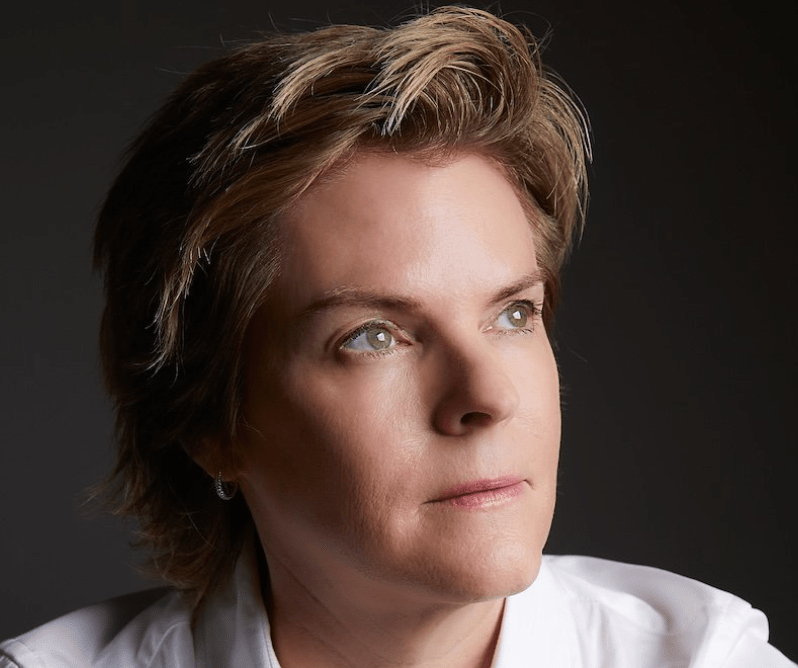
Creekbed Carter Hogan pulls off many transformations on his self-titled album. One minute he’s imagining that he’s a gun or an apiary and the next he’s a scorpion or tumbleweed. While it’s not unusual for a songwriter to step outside themselves and take on another perspective to tell someone else’s story, Hogan seems to be diving deeper into his own and his relationship with the world around him. 

“If I Was” is a hypnotic heartbreaker that quite reasonably imagines he’d be given more care and value as items like a gun, a coin, or a doll. It’s a completely reasonable assumption on both a personal and societal level. Laws and rulings in recent years have shown immense preference for the rights of guns, gender norms, and big money, especially when compared with a trans Texan. But there’s also a smaller scale truth to be gained here. We all know the hobbyist who devotes a little too much time to loving something that can never truly love them back. Say, an impressive folk music collection. It can’t feel good to be the human being also vying for their attention. Hogan wrote the tune with his father in mind.

“It’s a very capitalist relationship,” he said. “As long as I’m a product that can do what he wants me to do and be what he wants me to be, we have a relationship. But when I’m not doing those things, there is no value for me. It’s a very cold way to describe it and it’s a very cold feeling.”

“Lord, Make Me A Scorpion” relies on a similar device. Hogan asks for divine intervention to get over someone. He sees strength and the ability to move on in the desert environment around him. It’s a ruggedness that few introspective folkies possess, but the observations are gorgeous. A thunderstorm as a good cry. A rattlesnake as a fresh start. It absolutely works as the most traditional song on the album. Hogan thanked teachers in their life for helping them see value in everything.

“They taught me to see beauty and communication and language and interest and value in everything.” Hogan said. “I think a lot of that is indigenous knowledge. As a white person who grew up in Oregon, there were animals that were good and animals that were bad. You were afraid of the bad animals and protected the good animals. When I think about scorpions and rattlesnakes, they’re extremely beautiful objectively. They’re so interesting, they’re so resilient. I think being curious about the world is how you find value in everything.” 

“Sycamore” feels like the most personal track on the album. The trans songwriter discusses the struggles of trying to conform to gender roles for the sake of others with a delicate touch vocally. It’s a powerful contrast between the first “prayed for the day to be over” to the last “form of eternity.” The former is perhaps sweeter and more feminine than Hogan usually presents and the latter is a beautifully placed sour note, perfectly imperfect. Queer folk fans are going to feel that growth and share in the joy.

“I actually think most of us are outside in some small way.” Hogan said. “I think people are more related to each other in terms out outsiderness than they realize. That fear that someone will discover that outsider quality and lock you out for good is what keeps people separate. I think writing and performing Sycamore is a way for me to present my very small thing at the feet of everyone else and to try as hard as I can to invite them to find their small thing and bring it to the table. 

Creekbed Carter is certainly a more interesting album because there’s another role Hogan plays quite comfortably: the quirky humorist. “Through With Lovin’” is almost more comedy act than musical performance with its silly lyrics, tempo changes, and ability to skewer both form and self. “The Relic Song” is a similarly-styled history lesson that takes aim at the medieval church. Hogan grants the corrupt practices a measured amount of legitimacy while throwing in a Pokemon reference. There’s definitely some provocative intent behind this one, but it’s lighthearted enough to only offend those looking to be offended. The two tracks are certainly outliers in terms of the tone and depth of the album but are almost perfect for closing out a radio hour with a laugh. 

Above is the full episode as aired on WUSB’s Country Pocket, including both my interview with Creekbed Carter and the songs we discussed, starting with If I Was, which has some profound and upsetting things to say about value. The interview begins with the second video in the playlist. You can hear the show live every Monday at 11am on WUSB 90.1 FM or check the blog to watch it as a YouTube playlist. Visit http://www.WUSB.fm and https://www.creekbedcarter.com for more.

Posted in On Air

Jesse Lynn Madera Knows Love Can Be Complicated. She’s Not Going To Let It Stop Her.

“I don’t think it’s our perfections that attract us to one another. I think it’s our flaw patterns, kind of like the way a key would fit in a lock,” Jesse Lynn Madera said while discussing her album Speed of Sound.

Madera discusses different relationships throughout the album from the teenage lust of “Austin” to the serious attempt at love she had with an isolated older man. While many stories come from Madera’s own life, others come from observing friends. What they all have in common are the contrast between a complicated situation and straightforward love involved. 

“Last Call” describes a woman who clearly values a man more than he does her. “Sweet Pretender” features a cheating man and a woman still trying to recapture his heart. Madera said she’s seen friends in situations like these and has tried to understand where they’re coming from. 

“I think it all comes down to pride,” she said. “To have that attention pulled away so quickly, I think it’s just searching for self worth.”

The title track describes a particularly consequential relationship Madera had with a man a decade her senior. He was “parentified” in some ways, she explained, but ultimately preferred isolation and was often unhappy. 

“I felt like I had the job of being the sun, being with someone who rarely smiled,” said Madera. “He taught me a lot about work ethic and discipline. He taught me a lot about cooking. Something good comes out of every relationship.”

The song is tender and dramatic and captures her uncompromising desire to meet his needs. Much like in other songs, Madera seems fully aware of his difficulties and that she might not be the best fit for him. But the decision to continue to love him feels urgent and simple.

“I love New York City,” Madera explained. “New York City is dirty and full of rats and not always safe. And I love L.A. despite its reputation for being shallow. I moved around a lot in life and I can celebrate the good even while noticing all the negative aspects.”

The conscious decision to look beyond red flags rather than ignore them or dilute their meaning is the most fascinating part of the album. Right up there is Madera’s belief in a type of fatalism with love. “Ten Miles Down” describes a relationship doomed from the beginning but an attraction so strong that it will catch fire anyway.

Luckily, Madera has found her key. She’s happily married and considers her current relationship to be worlds apart from the painful ones that populate the album.

“You gotta swing the bat a few times in order to hit a home run,” Madera said of her husband. “He set the standard. And not just with loving relationships but with friendships and familial relationships and what I expect.”

Above is the full episode as aired on WUSB’s Country Pocket, including both my interview with Jesse Lynn Madera and the songs we discussed, starting with Ten Miles Down, which dives headlong into a doomed relationship. The interview begins with the second video in the playlist. You can hear the show live every Monday at 11am on WUSB 90.1 FM or check the blog to watch it as a YouTube playlist. Visit http://www.WUSB.fm and https://www.jesselynnmadera.com for more.

Posted in On Air

The Posthumous Release of Quilt Floor Shows We Still Need Mama Zu

It may have taken the combination of a global pandemic and a broken finger from a dog attack, Linwood Regensberg finally found time to finish Jesse Zazu’s final album. Quilt Floor spans a range from folk to punk and features sharp feminist and political lyrics.

The former Those Darlins bandmates were working on a new project, tentatively titled Mama Zu, before Zazu’s untimely death from cervical cancer in 2017 at only 28. The album was something that at first, Regensberg was reluctant to return to. 

“When Jessi passed away it was shocking because no one in our circle thought it would happen,” Regensber said. “Even when things looked bad she would bounce back. I would get stressed out about what the toll might be of having to suffer through something that’s going to make you feel things. You get over all these little speed bumps and traumas and stuff along the way.”

While it took seven years to release, Quilt Floor is sadly just as relevant today as it was at the beginning of the Trump era. “Emotional Warrior” is about the man himself, though the thin line between making crass jokes about sexual and acting on it explored on “Make a Joke” may have just as much to do with him. 

Zazu and Regensberg switch genres effortlessly from the Bangles-esque sound of “Make a Joke” to the slower country tune “Guitar World,” which criticizes the sexism present in Nashville. Again, the album is seven years old but hasn’t aged a day. 

“She’d ask a question and they’d talk to her like she’s a child or they’re looking over at me,” Regensberg said of their time in a Guitar World. “It’s comical in a way because it’s so absurd. But somebody who’s working at the guitar store is going to talk down to someone who’s on tour and selling tickets.”

Zazu’s lyrics are feisty, funny, and always happy to punch up. Besides Trump and sexism, Zazu targets topics as small as someone who won’t shut up and as large as capitalism. 

“I was always really jealous of how good she was with lyrics,” Regensberg said. “She could cut the fat out of things and get to a point. In songwriting it’s really tough to do especially on topical things. She could sum things up in a way that was both poignant and kind of funny. She’s somebody that stands for truth and fairness and treating people with kindness. And anything that doesn’t fall in line with that she’s going to speak out.”

A viewpoint like that is still necessary in 2024. Zazu was never more fierce than as Mama Zu and it’s tragic to know it’s never coming back. Regensberg’s reluctance to work on finishing the album came in large part due to his busy touring schedule with other fantastic indie-Americana acts like Low Cut Connie and Tristan. It also had to do with the difficulty of exploring the emotions of that loss and the awkwardness of making changes to the art of someone who isn’t there to defend it. But ultimately, he didn’t regret it.

“Some feelings will come back and maybe it’ll bring some tears,” he said. “But at the same time the joy was bigger than everything else. This is one way I can spend time with somebody that’s gone.”

Above is the full episode as aired on WUSB’s Country Pocket, including both my interview with Linwood Regensberg and the songs we discussed, starting with Four Leaf Clover, a cover song on which he duets with Zazu. The interview begins with the second video in the playlist. You can hear the show live every Monday at 11am on WUSB 90.1 FM or check the blog to watch it as a YouTube playlist. Visit http://www.WUSB.fm and https://mamazu.bandcamp.com for more.

Posted in Uncategorized

Ismay Leaves Behind Dopamine and Ranch Life for the Real World on Desert Pavement

Ismay is ready to face the real world. The non-binary ranch hand turned folk singer may have spent a lot of time with animals and streaming television during the pandemic, but they’re now fully focused on a music career and learning how to cope with well, everything. 

Desert Pavement makes a strong argument for trading in vices and isolation for genuine experiences. It comes with an appropriate overhaul of Ismay’s sound. What on previous releases used to be almost monasterial finger picking has become more accessible strumming. If Ismay means to encourage more interaction with others, that’s a strong first step. 

It’s also an album deeply rooted in nature and ranch life, which makes sense for someone who spent a decade working more closely with animals than fellow people. One of Ismay’s great strength is capturing an animal’s point of view, be it the nervous shrew, curious raccoons, or shy coyote. That level of understanding makes them full characters in a song and turns something oriented in observation into relatable actions

“When you work on a piece of land you have to understand what you’re surrounded by from its own perspective in order to know what you’re doing,” Ismay said during a WUSB interview.   

Ismay takes a similar route to understanding people. Interestingly it was reading about dopamine that sent them in the direction Desert Pavement ultimately took. Ismay came to realize just how unnatural smartphones and instant gratification has made modern life and how much we rely on vices to numb discomfort. 

They explained that while everyone is entitled to some enjoyment, something becomes a vice when it’s used to fuel disengagement. Ismay used their own love of television comedies as the basis for “Streaming Family,” which showed someone relying on the company of a work of fiction instead of actual people. 

“We’re isolating ourselves and numbing our feelings it’s because it’s overwhelming to accept and address the complexity of the real world,” Ismay said. “I think that we nowadays don’t spend as much time with other people or being bored. We don’t spend enough time allowing our emotional waves going up and down. I have to be more willing to deal with the emotional roller coaster of being a person.” 

It speaks to how developed Ismay’s ideas were that they also included somewhat of a counter argument on the album. Some characters, especially the shrew becoming exposed to predatory birds and the family encountering a “Stranger in the Barn” are going to face genuine danger in the process of opening themselves up to the real world. Sure most of it will come in the form of stress and disappointment and we as people don’t have to worry about birds swooping down the eat us, but the discomfort can be real. It’s something Ismay certainly understands as an artist who’s performed before audiences and a panel of reality show judges. 

“I’m not really the most intrinsically confident person,” Ismay said. “Getting to see myself on those platforms talking about my lack of confidence was an opportunity for me to realize that I had to move past these insecurities and grow into the person that I really wanted to be.”

“Stranger in the Barn” winds up being about a drifter who just needed some shelter and was friendly to his unwitting hosts. The song is a parable meant to show that the unknown isn’t always scary, but even people without social anxiety know that situation can end up badly.  

“I would hope that my best self would go out and deescalate the situation, but I’d probably freak out,” Ismay admitted.  

Luckily there is, for most of us a place between befriending intruders and relying on the canned laughter of a sitcom for company. A place that can grant us the enjoyment a vice brings without relying on it to the point we can’t ride the wave. And while Desert Pavement points quite clearly to those lessons, I’d urge listeners to take note of the way understanding the perspectives of ranch animals makes for rich, positive interactions. That might have some applications for people too. 

Above is the full episode as aired on WUSB’s Country Pocket, including both my interview with Ismay and the songs we discussed, starting with The Dove, the Shrew, & the Raccoon, which does a pretty good job of capturing animal personalities. The interview begins with the second video in the playlist. You can hear the show live every Monday at 11am on WUSB 90.1 FM or check the blog to watch it as a YouTube playlist. Visit http://www.WUSB.fm and https://www.ismaymusic.com for more.

Posted in On Air

Married Duo take on Love and Country with World Brand New

When Ty Greenstein’s Girlyman and Ingrid Elizabeth’s Coyote Grace began touring together, they formed a relationship. When their respective bands broke up, the two women did not. What followed was a marriage, newly allowed by the Supreme Court at the time, and the formation of their own duo, Mouths of Babes

World Brand New, the album that came out of it all, is unsurprisingly full of love songs. They range from the borderline twee “I Do” to the sad and disoriented “Pictures of You.” It’s an album divided into two parts, with the first eight songs discussing relationships in some way and the last two taking on politics from a fresh angle.

Of the love songs, two with nearly opposite moods are especially striking. 

“Summertime” celebrates queer love in a rural setting. It’s both a completely typical country love song when it references crops, bugs, country legends and trucks. But it’s something altogether different with the line “boys like her,”  a reference to an Ivan Coyote book, and discussion of how the locals gave them funny looks.

“There are queer people everywhere including in the smallest little backwater towns and they’re finding a way to live and love and thrive best they can,” said Elizabeth, describing her type as “grown up tomboys” 

The other, “Except for the Love,” is sung from the perspective of an older man nearing death and reflecting on how love was the only truly important thing in his life. Greenstein said she based the tearjerker on her grandparents’ relationship. 

“My grandfather suffered from dementia. He really declined but he still had that intense love for her and every time she walked into room he’d smile. He never forgot who she was.”

The politics don’t take up nearly as much time, but they wind up leaving just as much of an impact. “My Country” is a spectacular and wide-ranging pep talk that both levels with the struggles America has been facing while simultaneously holding out immense hope for a return to normalcy. 

“My approach in writing the song is to speak to the country the way I would speak to a friend who was looking worse for the wear,” said Greenstein, who admits “I have all this anger about the progress we haven’t seen yet and all the ways this country has failed us”

Still, she felt a more frustrated view on the situation that were as skeptical of the notion of American ideals as I am wasn’t warranted. 

“To be hopeless would be so strange because it would dishonor everyone who came before us and did have hope and made the progress we now benefit from,” she said.  

The final track, a Holly Near cover, is the source of that attitude and a perfect companion to the earlier original. It’s fascinating to hear something as deeply personal as faith in our government (or anything, for that matter) to be framed as morally correct for the collective and perhaps the only way I could get myself to believe that America’s best days are ahead. It’s still a tough sell, but certainly one worth aspiring to.

Above is the full episode as aired on WUSB’s Country Pocket, including both my interview with Ty and Ingrid and the songs we discussed, starting with Summertime, which blends country tropes with queer romance. The interview begins with the second video in the playlist. You can hear the show live every Monday at 11am on WUSB 90.1 FM or check the blog to watch it as a YouTube playlist. Visit http://www.WUSB.fm and https://www.mouthsofbabesmusic.com for more.

Press photo by Sophie Spinelle, Shameless Photography

Posted in On Air

Malcom MacWatt Recounts a History of Injustice and Response on Dark Harvest

Songwriter Malcolm MacWatt mined the history of Scotland, the UK, and the United States for injustices on scales small and epic. One moment, he’s getting into the specifics of whether a tax break meant to bring local vegetation back to Scotland is just, another he’s covering the emotions a woman born to an enslaved mother and the white man who holds her in bondage. 

The beauty of  MacWatt’s songwriting is that it’s all more complicated than it seems. The support for the environment is lining the pockets of wealthy landowners; the woman, performed by Angeline Morrison, feels both love and scorn for her father. 

“I think the Scots have always had this idea of social justice” said MacWatt, who grew up across a small body of water from where Scottish highlanders were evicted from their land so that landlords’ sheep could graze there. “I suppose being a colony of England, there’s been that very long history of right and wrong. It’s been engrained into me, especially by my grandmother.”

The title track tells a remarkable story of environmental protest taken to the furthest possible extreme. After Gruinard Island is used for biological weapons testing in the Second World War, the British government allows it to remain contaminated rather than go through the expense of cleaning it up. A group of still unidentified scientists changed that by transplanting some of the contaminated soil to mainland government locations. The act may well have been environmental terrorism, but MacWatt is still a supporter.

“That idea of direct action for the benefit of the whole country, I was very down with that.” MacWatt said. “It’s always a balance of moralities. At the end of the day, I think if they hadn’t shown a willingness to take action that could border on terrorism, I think we’d have ended up having nuclear waste dumped in Scotland.”

Recent events in Europe and the States have shown that the types of injustice referenced in songs like “The Church and The Crown” could once again be the norm in parts of the world that have made so much progress. The song references Wat Tyler, John Ball and the Peasant’s Revolt, an uprising based in part on the notion that royals were no more favored in the eyes of God than ordinary men.

“It all ended badly for the peasants and since then, nothing’s really changed that much for working people in this country,” MacWatt said. “I think when I was first writing this album, I did not set out to write such a heavy and grim album. There’s songs that I wrote as protest songs but they ended up a lot more resigned in tone. I feel powerless in the face of all this conflict going around.” 

If there’s any hope to hang onto, it shows up in “Semi Scotsman.” MacWatt identifies that way because he is mixed race, though he was born to one Scottish parent and was raised there. In it, MacWatt wishes for an independent Scotland to at last become a reality.

“What I love about the Scotts is that there’s a stoic sense of just getting on with it, and like the Irish, there’s kind of a dark humor there that comes out of hard times,” MacWatt said. “It’s cold, it’s wet, but I think the Scots as a whole are pretty warm. There’s a hospitality there. You’d always give shelter and the heat of your fireside to a stranger. It’s a small country but it’s got a big heart.” 

Above is the full episode as aired on WUSB’s Country Pocket, including both my interview with Malcolm MacWatt and the songs we discussed, starting with The Church and The Crown, which tells the story of ill-fated rebels in London. The interview begins with the second video in the playlist. You can hear the show live every Monday at 11am on WUSB 90.1 FM or check the blog to watch it as a YouTube playlist. Visit http://www.WUSB.fm and https://www.malcolmmacwatt.com for more.

Posted in On Air

Hannah Kaminer’s Heavy on the Vine Explores Her Bargaining Phase

Hannah Kaminer sings about relationships, aging, and more on Heavy on the Vine, but it’s her exploration of bargaining that’s most compelling. Describing no less than salvation as “a bargain, but a hard one,” Kaminer realizes that there are certain deals she’d be willing to make. 

“Heavy on the Vine” sees Kaminer willing to bargain away almost anything for a little more time with a loved one, save for her sense of touch. Instead she comes away with a sense of frustration that she has no one to strike the deal with. 

“I think that when I grew up in the church I was taught resignation and submission as a way to be a good person. But as I’ve gained a sense of agency, I think I do find myself bargaining more. It’s not always rational.”

“Broke Down Girl” is a portrait of a train wreck of a woman latching herself onto a man in a less than healthy way. “I won’t pop your bubble/if you don’t pinch me” is the closest Kaminer comes to allowing one of her bargains to play out, though any details about the man and things play out are left to the listener to imagine. 

“If you’re hurting bad enough, you just want to be lied to. It’s rare that you line up with another person on that unless alcohol is involved. What I was drawn to is that we deceive ourselves just for a little while. I think a lot of relationships start out like that.” 

The sense of desperation was palpable to me, but Kaminer says audience members at her gigs have had a much different reaction to the song. 

“A lot of people will say ‘that song is really sexy.’ I try not to laugh. I almost want to say ‘you just told me a lot about yourself.” 

Irene (It’s a Big Old World) is the lighter version of that hopeless bargaining. There’s absolutely no hope that Irene is looking up from her phone and noticing her admirer but it’s a brisk song that’s played more for laughs than anything else on the album.

Though “The Has-Been” doesn’t mention bargaining, it’s a stunning take on aging or losing steam. As a man looks in the mirror and wonders about his worth, his wife convinces him that instead of a has-been, he’s a has-been-there. It’s the type of corny word play country gold is made of and an absolutely beautiful message about support and value.

“Nostalgia can be a negative emotion but it can be a really positive one as well,” Kaminer said. “In a really sweet love story, you would have the other person to [help you] remember life how it actually was and not how you think it was on your really bad days.” 

It’s exactly the opposite of “Broke Down Girl” in that there’s no fixing anyone or throwing history by the wayside. It’s a song that shows that our worth and our image should come from that history and that healing comes from a love founded in truth. The word play even reflects the idea that as our self worth weakens by seeing an aging body it the mirror it should strengthen through our list of accomplishments. It’s also the sort of hard-won solution that could never be found in a bargain. 

“Wish We Could Talk” ended the album, but it seems like it’s not quite the end to the story. There’s a lot more acceptance in the lyrics than in earlier songs. In whatever dispute the song references, traumas are acknowledged and motivations are presented as reasonable. It’s rational, but it holds out hope for things to change. 

For Kaminer, questioning and hoping and railing against reality is growth. It’s a step away from resignation and submission. If I were writing an album so run through with bargains and questions I think I’d end it on a note of acceptance or a plan to take some action to improve things. But that’s where I am in my life. Kaminer is documenting her own journey and she’s done a fine job of capturing her current mindset. There can be a lot of pain in asking those questions and trying to make those deals, but some worthwhile growth can be painful.

Above is the full episode as aired on WUSB’s Country Pocket, including both my interview with Hannah Kaminer and the songs we discussed, starting with Broke Down Girl, which just isn’t all that sexy. The interview begins with the second video in the playlist. You can hear the show live every Monday at 11am on WUSB 90.1 FM or check the blog to watch it as a YouTube playlist. Visit http://www.WUSB.fm and https://hannahkaminer.com for more.

Photo by Lysianne Peacock

Posted in On Air, Top Picks

Rett Madison Breaks Her Late Mother’s Silence on “One For Jackie”

One For Jackie is a hard listen. It covers a suicide driven in part by childhood sexual trauma and the guilt and pain a surviving daughter is left with. It’s the type of raw and brave album few songwriters even have the opportunity to write. Unfortunately for Rett Madison, the material was all there for her to make the most of. 

Make the most of it she did. Madison’s writing gives flashes of what her mother was like in life, shadowy glimpses at a villain that may have been the primary contributor to her mother’s death, and an extraordinarily honest look at her own guilt and heartache. The fact that the stories are so well written and performed makes them all the more touching. For Madison, it was a unique form of therapy.

“After I lost my mom, as you can imagine, it was a really complicated grieving process,” Madison said. “My mom had struggled for a long time with addiction, with mental illness, and I think some PTSD from some trauma she had survived. I really leaned into songwriting as one of the most instinctive ways I process my emotions.”

Jackie was, according to Madison, a diva in sunglasses and leopard print, chain smoking and laughing her way through life. One of the most relatable moments on the album involves Madison seeing a leopard print shirt at a “Flea Market” and wanting to purchase it for her mother who at that point had passed.  

A less common but equally understandable song is “One For Jackie, One For Crystal,” in which Madison dreams of traveling back in time and killing her mother’s abuser. The violence is graphic and justified. The decision to put out such an intimate and heartbreaking track came down to Madison’s desire to support her mother even though she was no longer alive.

“I think after I unearthed that information I felt a lot of pain for her,” said Madison. “I felt a lot more compassion for her and the struggles that she went through even just raising me. I think less about my extended family when I write those songs and put them out. I think more of giving a voice to my mom’s truth and her story. I don’t want my mom to be silenced. Even though I have my own rage about that situation it’s more about giving power to my mom through performing those songs.”

Almost the entire album focuses on Jackie’s life story or Madison’s reaction to her loss. “Ballet” is the one exception. It’s a joyful tale of falling in love and flourishing under that gaze. 

“The experience of grieving my mom but also falling in love for the very first time happened to be happening simultaneously,” Madison said. “And also my partner played a massive role in helping me work through that grief and also healing me in a lot of ways just with their love.” 

A feeling of guilt is often mentioned, although Madison realizes now that she was not responsible for her mother’s death. Ironically, it was the discovery of her mother’s abuse in old medical records that both brought on a fresh wave of pain and set her free from an existing one. 

“I would say to anyone who’s lost a loved one that way: it isn’t your fault,” said Madison “I think a lot of us are left with no closure or no answers and the thing we do in the moment is turn the pain inwards. Unearthing that information that she was a survivor of childhood sexual abuse released a lot of guilt from my shoulders because I finally realized that my mother’s pain began much earlier than my arrival of her daughter. Obviously it was painful learning that my mother went through that but also having that information freed me in a lot of ways.” 

There’s really no easy way to explain or understand what Rett and Jackie went through unless you’ve experienced some form of it yourself. But for those of us who have, One For Jackie is an essential listen that can help provide closure in a way that few other works of art can. 

Above is the full episode as aired on WUSB’s Country Pocket, including both my interview with Rett Madison and the songs we discussed, starting with Flea Market, which might tell the story of the most emotion anyone’s ever experienced over an ugly shirt. The interview begins with the second video in the playlist. You can hear the show live every Monday at 11am on WUSB 90.1 FM or check the blog to watch it as a YouTube playlist. Visit http://www.WUSB.fm and https://www.rettmadison.com for more.

Posted in On Air

Jason Hawk Harris Shares His Beautiful, Painful, Complicated Grief on Thin Places

Thin Places begins with a moment of release. The ashes have been scattered and a storm washes them away. Jason Hawk Harris lost his mother six years ago, but the pain is still fresh. 

“I’d say that the moments where I’d just lose it, those moments are now few and far between,” Harris said. “But I don’t think that that’s an effect of the grief fading, I think that’s just me learning how to live with the loss. You just learn to live with the pain and in the process your heart grows a bit.”

His album is magical. It mixes spirituality and autobiography to detail a long, painful process of making peace with death. From the unexpected but beautiful bass drop on “Jordan and the Nile” to the dancing skeletons on “White Berets,” Harris excels at using unique spiritual imagery and sounds to tell his story. The bulk of the album is autobiographical, taking the listener from a painfully awkward funeral to his finding a reason to move forward in true love. The unexpected decision to fast forward to Harris’ own death and resurrection completes a narrative that may not ever come to a satisfying conclusion and opens a window into some deeply considered spiritual beliefs.

“I love to speculate about this,” Harris said. “I think it makes sense to me that if there is an afterlife, it has to be infinite powers better than the best possible thing that occurs here on Earth. We’d get to hang out for endless hours and talk and chat and smoke and drink and wake up without a hangover.”

“Bring Out The Lillies” is a standout moment in the narrative. It captures the otherworldly awkwardness of losing a close family member and the absolute failure of comforting words and gestures to fill the void. The funeral would almost play as a comedy if not for the depth of the pain.

“Anytime I say that my mother passed, I can tell immediately if this person knows what it feels like or they don’t.” Harris said. “If they don’t, they’ll say a very well intentioned ‘I’m sorry for your loss’ and kind of talk and flop all over themselves. I appreciate it, but at the same time it’s very different if I go up to someone who’s lost a very close family member, because I’ll say ‘I’ve lost my mother’ and they’ll just go ‘Damn. Yeah.'”

“The Abyss” is about an experience relatively unique to Harris. He was able to read his mother’s journals and understand the pain that led her to the addiction that claimed his life. It could’ve easily dragged him into an emotional spiral as well, though it’s all halted by a woman’s smile and presumably love. 

One of the beautiful things about Thin Places is that a grieving listener can find true connection at different points in the album. “Shine A Little Light” is experiencing loss at its most raw and destructive. “Roll” is the beginning of acceptance. “I’m Getting By” is a transition from pain to a hopeful future. “So Damn Good” is the point at which existing relationships begin to fill the spaces left by the loss. A well-chosen cover of “Keep Me In Your Heart For A While” and “White Berets” turn death into an inevitable, beautiful process.

The fact that the jubilant “White Berets” ends with a callback to the start of the album somehow works as more than just a neat ending. Grief comes in waves. You’ve made peace with death and the afterlife and then the pain hits you all over again. And while thinking about a future where your dead body joins the greatest dance party in all of eternity is a nice way to soften the fact that we’re all going to die eventually, there’s still the concern of the here and now for even the most fervent believer. 

As for how to cope with death, I suspect the answer is somewhat like how Harris wrote “Jordan and the Nile” without having a clear understanding of what he was writing.

“It’s something that I’ve never really wanted to fully explain to myself,” said Harris. “I think I want to sit in the mystery of it rather than have a dedicated notion of what it means.”

Dig into the well of religion, philosophy, science or all three, and find something beautiful to hang onto, even if pinpointing the exact rationale and history behind it might dampen the magic.

Above is the full episode as aired on WUSB’s Country Pocket, including both my interview with Jason Hawk Harris and the songs we discussed, starting with Jordan and the Nile, which doesn’t have to have an exact meaning. The interview begins with the second video in the playlist. You can hear the show live every Monday at 11am on WUSB 90.1 FM or check the blog to watch it as a YouTube playlist. Visit http://www.WUSB.fm and https://jasonhawkharris.com for more.

Posted in Uncategorized

Kelly Hunt Uncages Her Longing Heart For An Ozark Symphony

Kelly Hunt may never have lived in the Ozarks, but the Memphis native named her latest album Ozark Symphony after the mountain corridors she often travelled through to Kansas City. 

The song is almost a ghost story, though no one in it is dead. Instead her love seems to haunt the mountains where the object of her affection was from. She claims to have taught the song to the trees and mountains and wind so they could pass it on. Profound longing, changing locations, and emotions displayed for the world to see are all major themes of the album.

“I’m a creature of longing by nature,” Hunt explained. “I’ve always been a very nostalgic kind of person. I grew up in Memphis. I lived there until I was 18. I’ve not moved back, and I don’t want to move back because I actually like missing it and coming back to it and feeling that homecoming.”

Another track, “Everybody Knows,” addresses her tendency to declare what she’s feeling to the world. She’s basically chosen to explain herself through song as a career.

“It’s such a therapeutic thing,” said Hunt. “It feels like a constructive use of something that is painful or hard. If I didn’t have that, I don’t know what I’d do without that. But also, I think it’s a privilege to be able to enter people’s lives that way and maybe help them navigate the emotions that we all share.”

She does admit that there’s a downside to regularly telling her story.

“Part of the cost of the job is that you have to tap back into those places,” Hunt said. “You have to keep the wound open to a degree.”

In addition to singing from the heart, Hunt also sang from the perspective of the heart on standout track “My Own Civil War.” Based on a famous letter by Thomas Jefferson, the lyrics use universal themes and are delivered so sincerely that they feel as autobiographical as the rest of the album.

“I want to understand things, I have a curiosity about things, but also I’m a deeply feeling person,” Hunt said. “I feel like I’m often at odds with myself.”

The image of the brain locking the heart in a cage is both powerful and biologically accurate enough to make my brain chuckle and my heart cry out at the injustice. 

“I want to have a free heart, but also a free and open mind,” Hunt said, indicating that a balance is preferable.

Although I’m pretty sure my head is dominant, my heart can win out in sadder moments. The highlight of my conversation with Hunt was bonding over the way we both often spend time quietly imagining things. We also both may get just as much out of interacting with art as we do people.

Hunt recalled interacting with art and thinking “I feel like I’m feeling what they’re feeling. That sense of connection, of I’m not the only one who thinks this way or feels this way, those are very powerful moments.”

Above is the full episode as aired on WUSB’s Country Pocket, including both my interview with Kelly Hunt and the songs we discussed, starting with Ozark Symphony, one of the tracks I appreciate for its quiet intensity. The interview begins with the second video in the playlist. You can hear the show live every Monday at 11am on WUSB 90.1 FM or check the blog to watch it as a YouTube playlist. Visit http://www.WUSB.fm and https://www.kellyhuntmusic.com for more.