Posted in Uncategorized

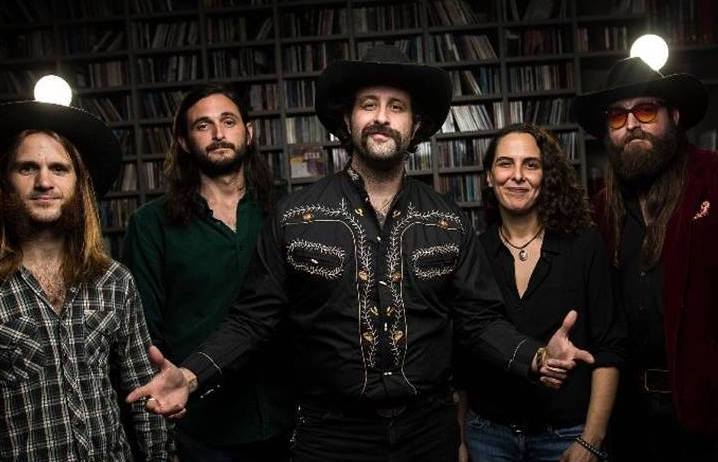
Harvest Thieves Chart A Righteous Path Through Hucksters And Insurrectionists

I’ve heard quite a few musical takes on the January 6th insurrection, but Cory Reinisch is the first to write it as a love song. It was an audacious move, but it worked. 

The idea behind “Empire Falls” is that as we quite literally got to watch society crumble on the news, our thoughts would turn to loved ones. How to comfort and protect them. How even in the darkest of times, the ones we love make fighting for a better life worth it. The absurdity and brutality of that day contrasted with the simplest family values makes for a surprisingly effective commentary on the whole mess.

“Of course that happened,” he said of the insurrection.  “Maybe we didn’t know exactly what it was going to look like, but we knew something like that was going to happen. It feel like there’s not much we can do to stop this tidal wave of horseshit. But at the end of this, at least I have you in my life. I thought that was a nice sentiment, a little bit of light in some darkness.” 

Reinisch is clearly passionate about politics. Seemingly forgetting that our interview was set to air on radio, he cursed quite a few times about the hucksters and wannabe despots who make up so much of our political conversation.

“I’m fascinated by our inability to parse out bullshit,” Reinisch said. “I think we let the devil in the door and now we don’t know what to do with it,” he added, mentioning Donald Trump as an inspiration for the song “Birth of a Salesman.” 

Much of the album focuses on extremes. There are examples of virtue: The values of “Good Man’s Countryside,” the solid foundation of “McCulloch County Wind Chimes,” the magic of witnessing someone in their “Golden Age.”  There are of course the villains of “Empire Falls” and “Birth of a Salesman,” not to mention an ex in “Gaslighter” and crooked preachers in “Cadillacs in the Sky.” It’s a lens he applies to the Trump movement, at least at this point. 

“I truly believe it was with the best of intentions that support was thrown behind this movement at first because it came out of frustration,” Reinisch explained. “Over time, I think there started to be a darkness. It started to be a vengeance ideology.” 

As to why the people who value freedom the most are putting their votes behind eliminating so many personal freedoms?

“I think it’s because they’re too far gone,” Reinisch opined. “It’s not a rosy thought but this movement has gone beyond one man. It’s just anger and revenge.” 

“Friendly Fire” is the most effective song outside the political tracks. It details Reinisch’s refusal to follow a traditional path, stating that it took a unique mix of self sabotage and determination to put him on the path to a music career.

“I’ve had to deal with raised eyebrows and questions my entire life, and that’s fine,” said Reinisch, “I was always going to do what I was going to do.”

As The Sparks Fly Upward documents problems in our society from lying and corruption to glorified political violence and cruelty. But it’s in tracks like “Empire Falls,” “A Good Man’s Countryside,” and “Friendly Fire” that Reinisch presents an imperfect solution: hold tightly to your values and goals and focus on the ones you love. The metaphorical fires are unlikely to stop burning soon, but it’s still possible to focus on and ultimately do the right things.

Above is the full episode as aired on WUSB’s Country Pocket, including both my interview with Cory Reinisch of Harvest Thieves and the songs we discussed, starting with Birth of a Salesman, which may or may not be about a certain president. The interview begins with the second video in the playlist. You can hear the show live every Monday at 11am on WUSB 90.1 FM or check the blog to watch it as a YouTube playlist. Visit http://www.WUSB.fm and https://www.harvestthieves.com for more.

Posted in Uncategorized

Rachael Kilgour Shares Her Memories and Mourning Process on My Father Loved Me

Rachael Kilgour sings in whispered tones at times on several tracks of My Father Loved Me, and it fits.

She delves into sensitive topics in her family’s history and psyche on the album so it makes sense that she’d approach them delicately. It also works in that she’s creating an intimate connection with the listener as she goes through her inherited insecurities and experiences with her father as his dementia progressed. 

But for all the raw nerves the album touches on, Kilgour sees it as a medium for healing. Due to her father’s progressing dementia, Kilgour struggled to get to know her father as an adult and uncovered a lot doing research talking to her family for this album.

“I wrote the songs to get to know Dad, to say goodbye to Dad, but it’s also about me, about figuring out why we’re alive, and I don’t think there’s a way to do that without talking about the hard stuff,” Kilgour explained. 

Throughout the record, Kilgour acknowledges that there were some complications in her relationship with her father. His depression and her parents’ separation took a toll on their relationship. There was a car crash they were involved in. And there were the demons she inherited from him. 

When it comes to her low self esteem, “the torch has been passed,” Kilgour said. “I think it’s a little bit of a mixed message when parents love and support us so well but struggle with their belief in themselves.” Of the title track, Kilgour said “It feels like a little prayer every time I sing that song that I’m getting better at figuring it out and loving myself.”

A particularly powerful moment on the album comes in Dad Worked Hard. Kilgour questions a lot about how the world works through the lens of watching her family struggle financially as injury and dementia forced her father to retire and to require care.

“He was humiliated by it, I think,” Kilgour said of her father’s aging process. “It’s a common thing for men of that era. Slowly, Dad couldn’t do the physical work. He couldn’t provide for his family. It was really hard to watch him struggle with it. I think had he accepted it, it would’ve been easier.”

On an album that’s primarily mournful, reflective, and appreciative, Kilgour’s anger at the fact certain treatments for her father were out of their financial means stands out. She seems able to reconcile her father’s suffering when it comes to mental and physical conditions, but she views society as more at fault for not being structured more fairly.

“I felt that we were making these decisions about his care based on financial limitation, which felt very unfair,” said Kilgour. “It left me thinking about how we value different kinds of labor.”

As her father aged, Kilgour moved to Boston. Soon after, he passed. It’s a topic she still experiences guilt over, even as she acknowledges spending every second with her father wouldn’t be realistic or enjoyable. 

“He felt really comfortable with me and took a lot of pride in spending time with me,” she said. “It’s still hard to think about having denied him of that, I guess.”

Kilgour was able to come home for the last week of his life and be there with her family. She tries to hold onto her father’s best qualities along with the good memories.

“I would like to be a helper in the way that he was. I’d like to be as reliable, maybe not quite as stubborn. And I would love to love the people I love as well as he did.”

Above is the full episode as aired on WUSB’s Country Pocket, including both my interview with Rachael Kilgour and the songs we discussed, starting with My Father Loved Me, which examines their complex but positive relationship. The interview begins with the second video in the playlist. You can hear the show live every Monday at 11am on WUSB 90.1 FM or check the blog to watch it as a YouTube playlist. Visit http://www.WUSB.fm and https://rachaelkilgour.com for more.

Photo by Sara Pajunen

Posted in Uncategorized

Gabe Lee Examines Love, Mortality, and Empathy on Drink The River

Gabe Lee may not be able to move mountains or live forever, but that doesn’t mean he feels helpless. On his album Drink The River, he argues for an empathetic values system and urges listeners to act locally.

“Grasp what you can control and take care of the things within your own community and life that are within reach,” Lee said. “If you have things that you’d like to change about the world, that’s great, but occasionally we have to respect nature, government, and things that are going to sweep us off our feet from time to time.”

“Merigold,” the stormiest song on the album, reminds us of those forces. Lee based it on a touring acquaintance’s death and the way her young husband reacted to it. There are desperate prayers and death wishes that make his pain palpable. Lee sees this as just one more reason we should treat each other with kindness.

“There are a lot of folks out there just like you who are dealing with life and the things that life brings along,” Lee explained. “I don’t know if there’s anything you can do but remember that you can never know what a person has been through and to give folks the opportunity for your empathy.”

Lee often explains his songwriting as if it’s more of a science than an art, though that’s not to say the results are anything but pure-hearted and gorgeous. “Even Jesus Got The Blues” tells the story of a woman who doesn’t exactly have her life together walking into a church. The song focuses on her joy and redemption in the back pews, but it’s aimed squarely at the regular church goers up front.

“It’s more a message for the folks who choose to lay judgement when they have no basis,” Lee said. “We watch the news, we read the paper, we think ‘my goodness isn’t that terrible, thank God it’s not me.’ I don’t think it’s worth congratulating yourself that you’re better off that somebody. I think there’s a certain switch that might need to turn for folks to consider the world as more of a community.” 

Lee has in the past performed as more of an alternative country act, though “Drink The River” is dominated by a grassy folk sound that seems to fit perfectly with his voice and these lyrics. It’s by far his best album to date and the new sound has a lot to do with it.

“We just wanted to keep it, I don’t want to say simple, but very roots based,” Lee said. “I think cutting the fat and getting to the point of what the lyrics meant; the process was making the stories the point of listening to this record.” 

The lyrics all build to a meaningful message.

“Not to try to solve any world problems with a simple record, whatever you’re going through you’re not alone, Lee said. “Whatever anger you may harbor in your own situation, remember that other folks survived this and that means that you can too.” 

Above is the full episode as aired on WUSB’s Country Pocket, including both my interview with Gabe Lee and the songs we discussed, starting with Drink The River, which recognizes limits to what we can do for the ones we love. The interview begins with the second video in the playlist. You can hear the show live every Monday at 11am on WUSB 90.1 FM or check the blog to watch it as a YouTube playlist. Visit http://www.WUSB.fm and https://www.gabeleetn.com for more.

Posted in Uncategorized

Croy And The Boys Make a Case for a Better System on “What Good’s The Medicine”

Croy And The Boys’ latest album would be powerful if it were simply a bleak examination of the way the deck is stacked against working people, history is whitewashed, and gentrification is proceeding along. But “What Good’s The Medicine?” finds even more strength in its hope for humanity. It would be easy to examine the systems we’ve created and assume the worst about the people involved. Instead, Croy ends the album by questioning the concept of original sin. His almost naive faith in human kind is remarkable and heartwarming.

Folk music is, at its purest, a genre that empowers and empathizes with the working man and woman. Croy is armed with evidence and anecdotes. The title of the album is a reference to soaring prescription costs and our never-ending dependence on them. Croy, a construction worker during the day, doesn’t sound thrilled with his life on early tracks like “What I Had to Do” and “The Tunnel Has No End.” His failed try at college left him with debt and he works hard to support his family, though the obligations to others and society weigh on him. The reality is a bit more complicated. 

“I do think about things a lot and I try to process the world around me and sometimes it comes out negative,” Croy said. “I don’t think it’s all doom and gloom but I think people have to work really hard to make it if you’re working class.”

Though college didn’t work out, Croy doesn’t regret some of the critical thinking skills he learned there. And though having a kid forced him to give up on making music a full-time career, he is getting to spend the time with them he decided to pursue instead.

“I think that there are pathways, I think the unions can help deliver you some measure of stability,” Croy said before noting that the possibility of injury still makes life in the trades fragile.

One form of social criticism Croy wholeheartedly endorses is on display in “Video Spectrum In Bowling Green.” He details some of the incredible cultural discoveries he made in a small business and how his options dwindles as it was replaced by a Blockbuster and then a Redbox. Sure it ignores the advent of streaming, but this isn’t quite about a video store. It’s about gentrification in Austin

“I’ve been here for 15 years and there’s been lots of change and most people would interpret it as way too much growth,” Croy explained. “The loss of [the video store] was more that just a movie store closing. It was one of these touchstones of classic old Austin goes away. I think Austin was a place that for a long time was full of creative people where you could come as an artist and be inspired. With the rising cost of living here, a lot of this has gone away.”

Croy’s personal politics are very much left of center on the album, though he absolutely doesn’t identify as a Democrat. 

“I feel like I live a little outside of the American political spectrum, Croy said. “The Democrats aren’t providing anything other than things not getting worse. Joe Biden said as he was running that nothing will fundamentally change and we’ve seen that to be true.” 

Croy was particularly upset at the steps Biden took to avert a railroad strike by declaring it would be illegal for the union to do so.

“He stood on the side of capital against labor and working people see that.” 

But it’s the hope that makes all the sadness documented on the album tolerable. “Better Man” and “I Get By” show flashes of it. The idea of self improvement and coping in the face of injustice isn’t exactly liberating, but it’s necessary and well spoken. “Throw ‘Em Out,” by contrast, is a brief trip into a progressive society we can only dream about. Or, perhaps, one day achieve.

“I think it’s really helpful to spend time thinking about what a better world would look like instead of just looking at problems,” Croy explained of the song, maintaining that humans are capable of building something better. “I think that human beings are a communal species. We’re not the fastest, we’re not the strongest, we don’t have big claws or sharp teeth but we’ve been able to survive through community.”

Even if Croy returns us to reality in the form of “I Know About No Money” before concluding his album, his earnest case for a utopia resonates. 

“Through history, the things that we do together have defined our humanity, Croy said. “I think we live in a system now that pits us against each other in a lot of ways, but I think that’s unnatural.”

Above is the full episode as aired on WUSB’s Country Pocket, including both my interview with Croy and the songs we discussed, starting with “What I Had To Do,” which starts the album with a little bit of autobiography. The interview begins with the second video in the playlist. You can hear the show live every Monday at 11am on WUSB 90.1 FM or check the blog to watch it as a YouTube playlist. Visit http://www.WUSB.fm and http://croyandtheboys.com for more.

Posted in Uncategorized

The Lucky Valentines Mine Tragedy for Beautiful Streaks of Hope on Losses

The Lucky Valentines are the rare band to have an official motto: Making sad things beautiful. By that definition, Losses is an extraordinarily successful effort from Shaun and Jamie Carrier. 

“Swallowed” accomplishes the task quietly and stunningly. It tells the story of Shaun’s father walking out on his family with details that engage the five senses and pull on the heartstrings. It’s a loss that shaped Shaun tremendously, from childhood pain to his desire to be a better father to his own children. The low guitar plucking and simple fiddle lines build from a place of absolute pain to a lasting message of hope. Few songs are quite as perfect as this one.

“Swallowed is about my first memory as a boy, which is the night my dad left,” Shaun said, fighting back tears. “There’s this pain that comes from the initial loss and then the ultimate loss,” he added, referring to his father’s eventual death. “Then there’s this other ingredient which is this fire that we carry and foster, which is the love and hope. I get to be a father to my children. I get to love them. That love gets to survive.”

Much of the album charts a similar, beautiful course. The loss and pain are well documented but there’s almost always a sliver of hope that somehow makes the pain both easier to handle and more acute with the knowledge that someone had to not only feel it, but also heal from it. 

“Ashes to Ashes” is a different kind of farewell, a letter to deceased ancestors who build a beautiful home. It starts out by telling them that their property is in disrepair and their children have all moved far away. But it also celebrates the positive legacy they left for neighbors and family even if all reminders of it will eventually fade.

“It’s telling that person, ‘you’re so wonderful and I appreciated you and I saw how hard you worked,’” Jamie said. “The love is what sticks around even when the rest of it is blowing away in the wind.”

As for her own legacy, Jamie is concerned that people won’t express what they feel about her until after she’s gone. 

“I know that it will disappear eventually but I’d rather see the fruits during my life,” she said.

Shaun is a member of the Chippewa tribe and Native spirituality informs Breaklands, a gorgeous imagining of dying and returning to the Earth. Native generational trauma and a drug addiction informs “Sober,” which rather bluntly describes a spiraling out and the imminent death that will follow if the character doesn’t change. Their hope for forgiveness and peace in the afterlife leaves little hope for their future on this mortal plane.

“Junkmail” is a particularly powerful song that returns to Shaun’s father. This time, he’s passed and Shaun is left to sift through his father’s belongings to find a will or some other trace of his last wishes. A particularly powerful portion of the song imagines Shaun wearing his father’s clothes, taking some of his  possessions, and sleeping in his pickup. It’s a heartbreaking way to imagine getting to know the man who walked out on his family at the start of the album.

When it came to planning his funeral and processing his loss, Shaun referenced a Native writer’s work.

“She talks about this tradition of not using a person’s name once they’ve passed on because while they’re on their way to wherever we go, it can call them back,” he said. “For me, the way I take that is that if there’s anything I can do for the people that I lose, it’s to let them go as best I can. That looks like working through the things that are hanging me up about them and to engage in forgiveness.” 

 Much like he does in his best lyrics, Shaun engages directly with the sadness and winds up finding a beautiful solution. This band’s motto seems good for more than just music.

Above is the full episode as aired on WUSB’s Country Pocket, including both my interview with Shaun and Jamie and the songs we discussed, starting with Ashes to Ashes, which is a strange and beautiful way of updating the dead on what’s happened since they left. The interview begins with the second video in the playlist. You can hear the show live every Monday at 11am on WUSB 90.1 FM or check the blog to watch it as a YouTube playlist. Visit http://www.WUSB.fm and https://www.luckyvalentines.com for more.

Posted in On Air

Optimism and Ties to the Past Define Mikaela Davis and Southern Star’s Genre-Bending Album

Mikaela Davis may have been playing with members of her backing band for the better part of a decade, but “And Southern Star” is the first album they’ve recorded as a group. It’s why she named the genre-defying album for them.

Davis, a harp player, brings something special to their blend of sounds. The harp can be beautiful or haunting, or content to be a little of both as it does on “Cinderella.” But it’s always otherworldly when compared to the average mandolin, piano or guitar found on American roots albums. Starting the album off with those plucking sounds was a fantastic decision that lets listeners know they’re in for something different before the first words are spoken.

“It adds some different textures that other instruments can’t,” Davis said of the instrument she’s been playing since age eight. “I can’t really explain what made me want to play this instrument but I felt connected with the harp pretty much right away.”

Davis studied harp classically in college but wields it more fascinatingly in a popular context. Combine that harp with a whining slide guitar and near constant backing harmonies and the whole album feels like a hazy folk-pop dream. Until it doesn’t. “Don’t Stop Now” is a bit too anthemic to be dreamy and “Leave It Alone” is straight up progressive rock with a significant electric guitar solo. 

“It’s not something intentional,” Davis said of the variety of sounds the band blends and explores on the album. “It’s something that happened because our influences are so vast.” 

As intriguing as the band’s sound is, and it certainly is the most apparent and fascinating part of And Southern Star, the lyrics are also thoughtful collaboration. Two themes emerge. The first is that, for better or worse, there are people and places we’re regularly drawn to, usually based on our formative experiences. It’s both beautiful and a curse according to Davis.

“In my experience everything comes back to your childhood; those are your most informative times in life,” Davis said. “Things that I went through in my childhood, you always come back to those moments.” 

That almost gravitational bond to people and places from the past presents as a struggle to overcome in “One of These Days” and takes on a melancholic form in “Far From You,” even if a glimmer of hope is allowed to exist. In “Promise” it’s a bit more frustrating and even comical as an unfulfilling relationship proves hard to shake. 

The second theme is one of future sighted optimism. Davis is rarely declaring that everything is great, but so many lyrics reflect her belief that it will be. “One of these days I’ll be fine.” “The sun is coming out.” “You will find somebody new.” Even “Don’t Stop Now” looks at long odds as no reason to quit. 

“In life, you just have to have hope no matter what’s happening,” Davis said. “You have to believe that there’s something that’s going to change or how are you going to convince yourself that something you’re working on is worth it?” 

Above is the full episode as aired on WUSB’s Country Pocket, including both my interview with Mikaela Davis and the songs we discussed, starting with Cinderella and those magnificent first harp notes. The interview begins with the second video in the playlist. You can hear the show live every Monday at 11am on WUSB 90.1 FM or check the blog to watch it as a YouTube playlist. Visit http://www.WUSB.fm and https://www.mikaeladavis.com for more.

Press Photo by Jamie Goodsell

Posted in On Air, Top Picks

J.D. Graham’s Journey from Addiction and Prison to Faith and Sobriety Makes for a Gripping Listen on “A Pound of Rust”

If tragedy and struggles make for good songwriting material, it’s no surprise that J.D. Graham’s album A Pound of Rust is stunning. It opens with the title track, fulled with confessions and unsure thoughts he’s still having in his seventh year of sobriety. It lists crimes and insecurities big and small and the terror that comes with admitting them.

“I always knew back when I made this album that this would be the first song,” Graham explained of the highly confessional first track. “I wanted the listener to know exactly who they were listening to for the entire album. I bare my entire soul.”

Leading with “A Pound of Rust” is a practice Graham has extended to his shows and even speeches in front of recovery groups.

Graham was imprisoned for a DUI that resulted in another man’s death. It was an event that sent him to prison for five years and began his journey to faith and sobriety.

“My sobriety came through my faith in Jesus,” Graham said. “My recovery program is faith-based and I also have an accountability group that I talk to at least biweekly.” 

Some of the album is written from the perspective of a man still in the throws of addiction, others tell stories of users spiraling from a third person perspective. But nothing is as powerful as “Letter From My Conscience,” an extraordinary conversation between the part of Graham that hoped for better and the part that gave into temptation. 

“It came easy because it was the truth,” Graham said of capturing that internal conversation. “I’m constantly evaluating my next move and the choices that I make in real time. My sobriety and my clean living, it’s not something that I just think about a couple times a day. I hold myself personally accountable for every choice I make. Looking back I had every chance to make those changes and for some reason it took a long road to make those changes.” 

Graham credits his recovery to his Christian faith. He  mentions religion briefly in a few songs, though he never fully dives into the topic. He very much lives his faith and his dedication to the recovery community. 

“At shows I always put it out there that if anyone is struggling or needs a ride or just want to talk,” Graham said. “My phone number is on the internet. I never know who’s going to call. So I will answer my phone no matter what the number says on it because it may be some guy I met two months ago who let some of the things I was saying sink in. Maybe he’s got a couple weeks of sobriety and is thinking about picking up again. I was to be there as much as I physically can, even a stranger.”

Graham addresses loss in ways both inspired and direct. “West Virginia,” a song about two people involved in a missed connection missing each other again, is absolutely gorgeous. The story doesn’t have to be true to realize that regret and wondering what could have been with relationships he torpedoed were among the thoughts swirling through Graham’s head as he sobered up in prison. 

“Her Memory” is a touching song about being haunted by loss and “Growin’ Old” is a well-written look at a man who’s seeing himself age and degrade while watching the world around him change in ways he doesn’t understand. Long time listeners will probably guess based on my politics that I don’t share Graham’s nostalgia for when public schools led students in prayer, but it’s not hard to sympathize with him as a man who is getting more out of his faith right now than any other subject he was taught. English composition probably checks in at a close second.

Luckily, the news is not all bad. Graham seems genuinely happy with how life has gone since he’s sobered up and gotten out. 

“I’m a different person, so thinks I normalized back in the day make me feel uneasy now,” Graham said. “Coming out of prison, sober for the first time in my life, it’s almost like being reborn. Doing a lot of touring, I’ve been to some of these places before but I have no recollection of them. I’m seeing things that I’ve already seen before but for the first time in my life. It’s a beautiful thing.” 

He’s especially happy with how well making amends has been going and the progress he’s made in relationships with his family. 

“Every single one of them is better,” he said of those connections. “I had a lot of amends to make when I got out of prison. I went down the list and called them up and met up with some of them for lunch and apologized and continued my real life confessional. Now I have healthy relationships with boundaries.” 

Posted in On Air

Brian Kalinec Explores Appreciation and Aspiration on The Beauty of It All

Brian Kalinec is perhaps as close to the definition of a traditional folk singer as you can get. His songs are earnest and lyrical with sparse accompaniment aside from guitar and a piano. In an increasingly hostile and cynical climate, his reflections on racial progress and his friendship with his neighbor Henry seems downright quaint. But sometimes, especially in these times, it’s nice to hear a thoughtful piece about moving in the right direction.

“I was born into the change, but there was a lot of resistance to that change,” Kalinec said of watching the Civil Rights Act become law. “We’ve come a long way, but there are people who would like to see us go back to what they consider to be the good old days.”

Kalenic doesn’t exactly have his blinders on. He’s well aware of some of the regressive trends in education and muses on another track as to whether it’s possible for this country to become less polarized. He doesn’t answer the question except to say making improvements is worth a try. Speaking with me, a younger millennial, Kalenic indicated that he holds out hope for my generation. 

“My daughter went to school with kids of many different backgrounds and cultures and colors and she doesn’t see herself as special,” Kalinec said. “But when I was a kid, that demarkation was there.”

Much like finding hope in this news cycle, many tracks on The Beauty of it All are about extracting the joy from life, even if it is at times “aspirational.” The title track, in particular, shines with optimism despite recognizing that the singer has lived more of his life than not.

“As I get a little older, I recognize that I need to be a little more aware of everything, especially be more present,” Kalinec said. “I always want to be more present for family and friends, but also appreciate the beauty of the world.” 

In addition to the title track, Fix-It Man provides a particularly endearing look at an older man appreciating life despite some of the hardships that come with age. Big Hearted continues the trend of aspirational thinking and learning from younger, kinder viewpoints. Breakfast at Midnight is, if not the healthiest idea, then certainly a joyful one. 

If most songs deliver those messages in a simple, positive way, Two Roads provides the gut punch. A young woman with big dreams dies young after guiding an alcoholic neighbor to sobriety. Part of making the most of life is understanding it could end at any moment. Kalinec provides narration that he, like most people, aren’t trying to save the world or numb the pain. We’re just managing money and time. 

“We all think when we’re younger that we’re [going to save the world] and I guess some people are a little more successful at that than others,” Kalinec said. “The important thing is that we save our own worlds. That’s probably the most that we can do.” 

If that sort of reminder doesn’t help his listeners live a little more purposefully, I’m not sure what will.

Above is the full episode as aired on WUSB’s Country Pocket, including both my interview with Brian Kalinec and the songs we discussed, starting with The Beauty Of It All, which is the aspirational title track. The interview begins afterward. You can hear the show live every Monday at 11am on WUSB 90.1 FM or check the blog to watch it as a YouTube playlist. Visit http://www.WUSB.fm and http://www.briankalinec.com for more.

Posted in On Air

On “Katherine,” Neev Plays With Voices Both Petulant and Graceful

Scottish folk singer Neev’s debut album “Katherine” is guided by clearly expressed deep thought. Many songs are reflections on relationships and the self. In most cases, those relationships or the character in the song aren’t in the healthiest of states. In some cases, the reflections aren’t the healthiest either.

“Fast Patterns” sees the a character struggling with a friend growing more distant. Instead of making some effort to reconcile, the song is a full on attack and a promise to make that friend change. It’s a last ditch overreaction that seems destined to doom whatever remains between the two.

“When I wrote that song, it was coming from a really ignorant and self centered voice,” Neev explained. “Every single line in the verse starts with ‘I think.’ If anyone’s coming from that point of view, there’s no agreement to be had. It’s me criticizing that voice. You’re never going to hold that person accountable because you’re not even thinking of them.” 

“Fast Patterns” isn’t the only time Neev criticizes unhealthy thoughts by expressing them, though it’s certainly the most effective. Other songs find effectiveness through more earnest expression and analysis. 

“The House” captures a relationship in a place where home no longer feels like a haven e and it seems like every move either party makes is just digging that metaphorical hole deeper and deeper. Neev imagined the central character as a 60s housewife (she’s from the UK; perhaps think 50s for American context) in search of liberation. 

“The character no longer feels home to be a safe place because they now feel it’s a place of repression,” Neev said. “It’s almost too small for them.”

Her observation is quite accurate. Nothing makes a space feel smaller than being trapped in it or sharing it with someone you’re uneasy around.

Neev’s voice is earthy and tender, something her instrumental arrangements match quite well. Both soft strumming and soaring strings work, though the understated sounds are much more common and hypnotic.

One song, “Without Warmth,” is truly special in terms of capturing healthy, rational, but emotional thoughts from the end of a relationship. The vulnerability and reflections on what’s failed are there, but the central character is able to frame the breakup as a gift and easing of burdens to the person their in a relationship with, and perhaps themselves. 

“The baggage that comes with spending time and having experiences with a person is that you feel like you have to hold onto those things in really petulant way even if the way you’re holding onto them might not be useful,” Neev said. “Bottom line, kindness and love are the most important things here, so how do we move forward knowing that?”

The fact that much of the album comes from a less healthy perspective makes gems like this and “Out of the Blue” mean even more. Moments of clarity somehow seem more valuable than clarity itself. Ending the relationship on kind, appreciative terms with well wishes and acknowledgment of the difficulties is the perfect way to end the album. It may be more of a dream breakup than a realistic one, but it’s incredible to experience something so nourishing, even if it may only be possible through well-written songs like these.

Above is the full episode as aired on WUSB’s Country Pocket, including both my interview with Neev and the songs we discussed, starting with Fast Patterns, which toxically describes how another person has become toxic. The interview begins afterward. You can hear the show live every Monday at 11am on WUSB 90.1 FM or check the blog to watch it as a YouTube playlist. Visit http://www.WUSB.fm and https://neev1.bandcamp.com for more.

Posted in On Air

Aaron Smith Tells The Legend of Sam Davis and Other Incredible Tales From Newton County

In setting out to tell the story of Newton County, Arkansas, Aaron Smith consulted books, historians, and local legends. In 13 songs, he introduces listeners to generations of colorful characters, historical atrocities on large and small scales, and a folk opera about a man trying to find his lost sister. 

“Newton County seemed like a magical place where big things could happen, a rough place where tough people settled,” Smith said, “As I started to hear stories, they just started to resonate with me.”

Sam Davis’ story was especially prominent. The Legend of Sam Davis plays out over the album’s final six songs and presents most of the story from the viewpoint of the titular character. There are moments of brilliance, like Davis’ desperate scramble to find “Bent Twigs and Hoof Prints” in tracking his sister after her possible kidnapping, and moments that are somewhat difficult to stomach, like Davis’ viewpoint that the Native American tribe took his sister “in the flower of her innocence.” The truth, Smith said, is likely more complicated.

“There’s a lot of reasons to doubt whether that’s a fact or not. There were people who left white society to live among Native Americans and that may have been what Sam Davis’ sister did and maybe it was an effort to save face that they framed that as her being abducted.” 

Smith, a man of mostly white but some Native American descent, said he didn’t feel comfortable appropriating the story of Native Americans during the era his album was set. But he does convey the horrors of the Trail of Tears by singing about Henri Martain, a Frenchman who settled in Arkansas and married a Cherokee chief’s sister. 

“He has Cherokee family and he sees what they were put through as very unjust,” Smith explained. “His family, from the time they settled in Newton County, made every effort to live as white people and be perceived as white as possible.”

While Smith uses terms like “half-breed,” it seems clear that he’s speaking as people then would have and not personally expressing those views. That’s further substantiated by “Looky There,” a song that allows Davis to speak but also contextualizes him as someone viewed as somewhat problematic even in his day. Still, Smith told me he has qualms about the way Native Americans are portrayed in the Sam Davis story even if he did eventually use a version of the story that Davis would’ve likely endorsed.

“It’s not about whether his sister was willingly or unwillingly taken into that life, but it’s really about how Sam deals with a world he can’t control,” Smith said.

Smith also had some worries about the role women played on his album, but he was able to write a couple of extra songs to make their story more complete.

“I realized all the women on this album so far have been kidnapped or murdered and we need to have some other stories,” Smith said.

Granny Brisco more than fit the bill as a strong woman, though Smith had to venture into the 1900s to tell her story.  Brisco was a midwife who travelled on horseback to her clients and worked into her eighties. He also credits another song, “The Snow Child” to having reached out to a local historian for better stories about women.

“Women like [Brisco] have held it together for us for a long time, and she played a really important role and was a respected person in her area,” Smith said.

There’s no shortage of drama to be found in Newton County. “Ab Clayborn” tells the story of a man whose plan to commit a murder of revenge was foiled by the intended victim already having committed suicide. That didn’t stop him from unloading his gun into the body and setting fire to it. “Dead Man’s Hollow” shows a colder side to the community as a noticeably diseased man traveling through town was given no aid and ultimately left to die in the elements. Brothers “Curly and Tom” commit a murder, causing their family to flee to Colorado. 

Each of these accounts are told beautifully. Contemporaneous viewpoints and values are woven into the songs while modern commentary exists in the narration. Even the music aids in the storytelling. “Ab Clayborn” benefits from hard strumming as gunshots. When Curly and Tom are revealed to have grown up rotten, the guitar strikes a decidedly sour note. 

The album as a whole serves as one of the most enthusiastic and thorough local history lessons in existence. Though “Ab Clayborn” may have to be left out, it would be easy to imagine local schools calling Smith in to perform and share some of the rich context he learned in his research. It’s a wasted opportunity if he doesn’t.

Above is the full episode as aired on WUSB’s Country Pocket, including both my interview with Aaron Smith and the songs we discussed, starting with Henri Martain, which came along with a book about the Martain family. The interview begins afterward. You can hear the show live every Monday at 11am on WUSB 90.1 FM or check the blog to watch it as a YouTube playlist. Visit http://www.WUSB.fm and https://aaronsmithsongs.com for more.